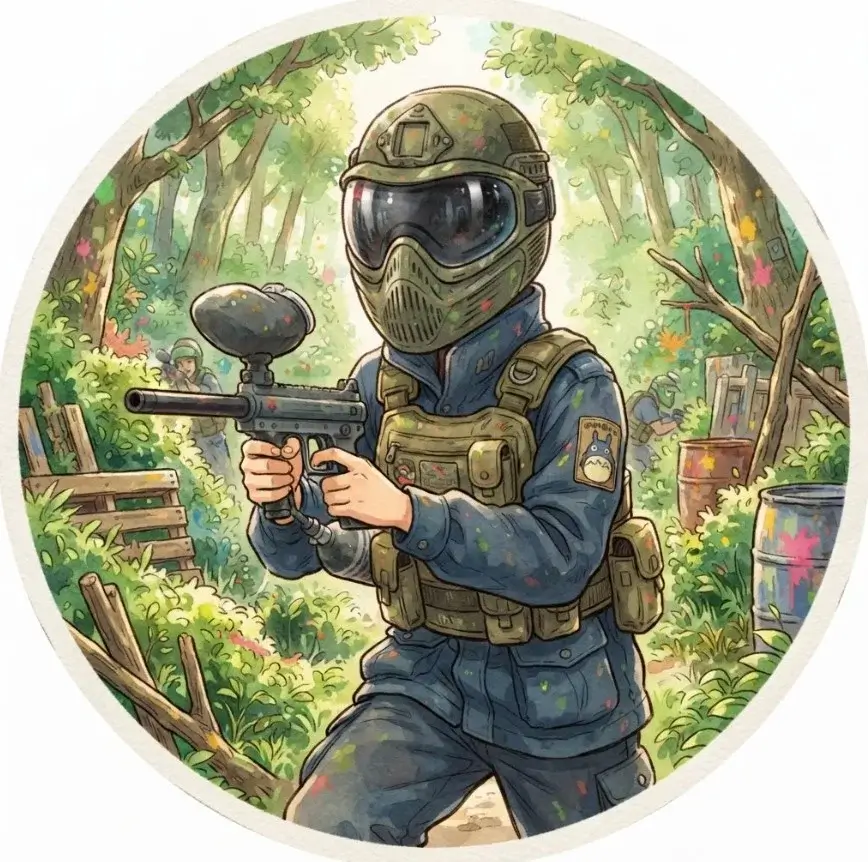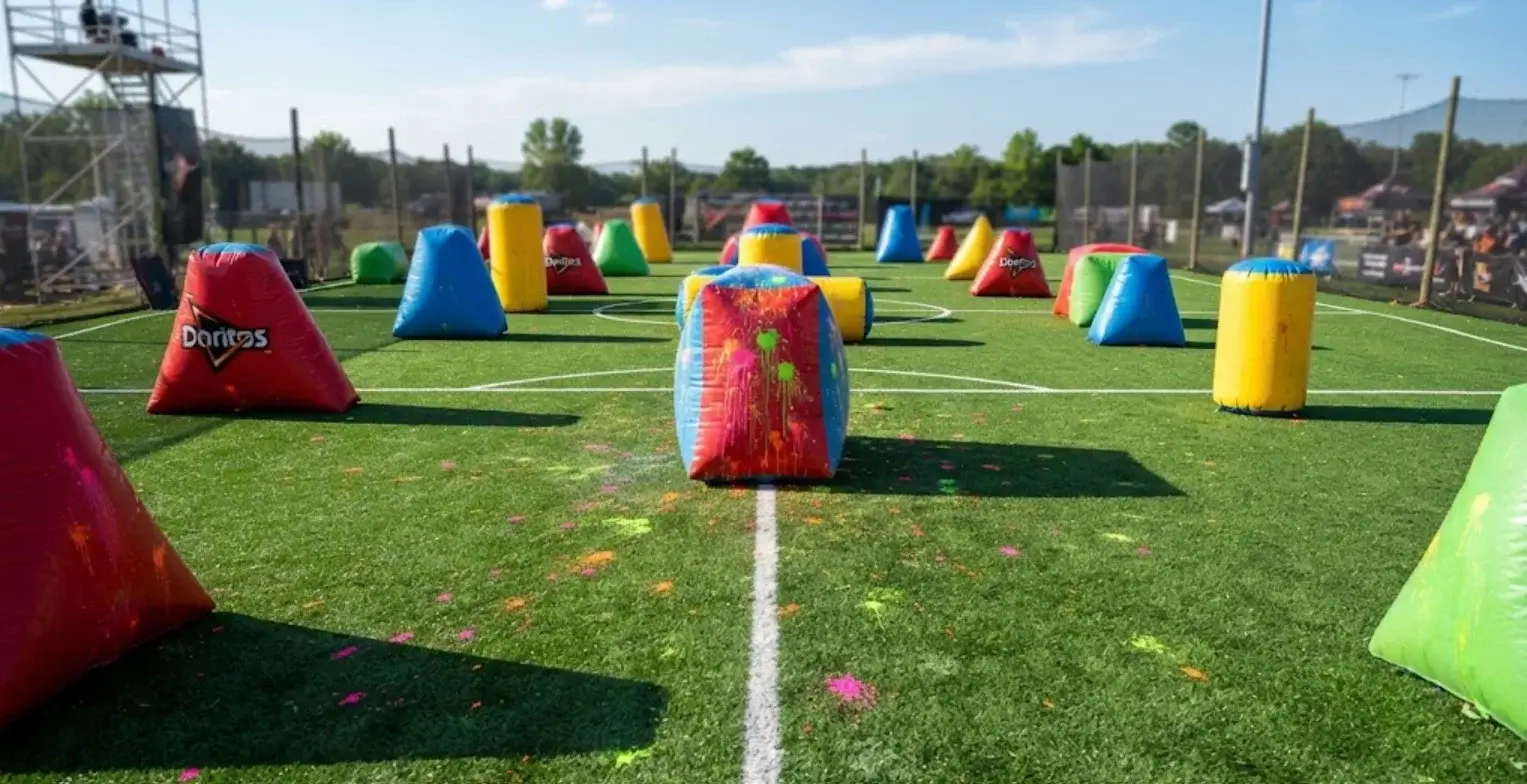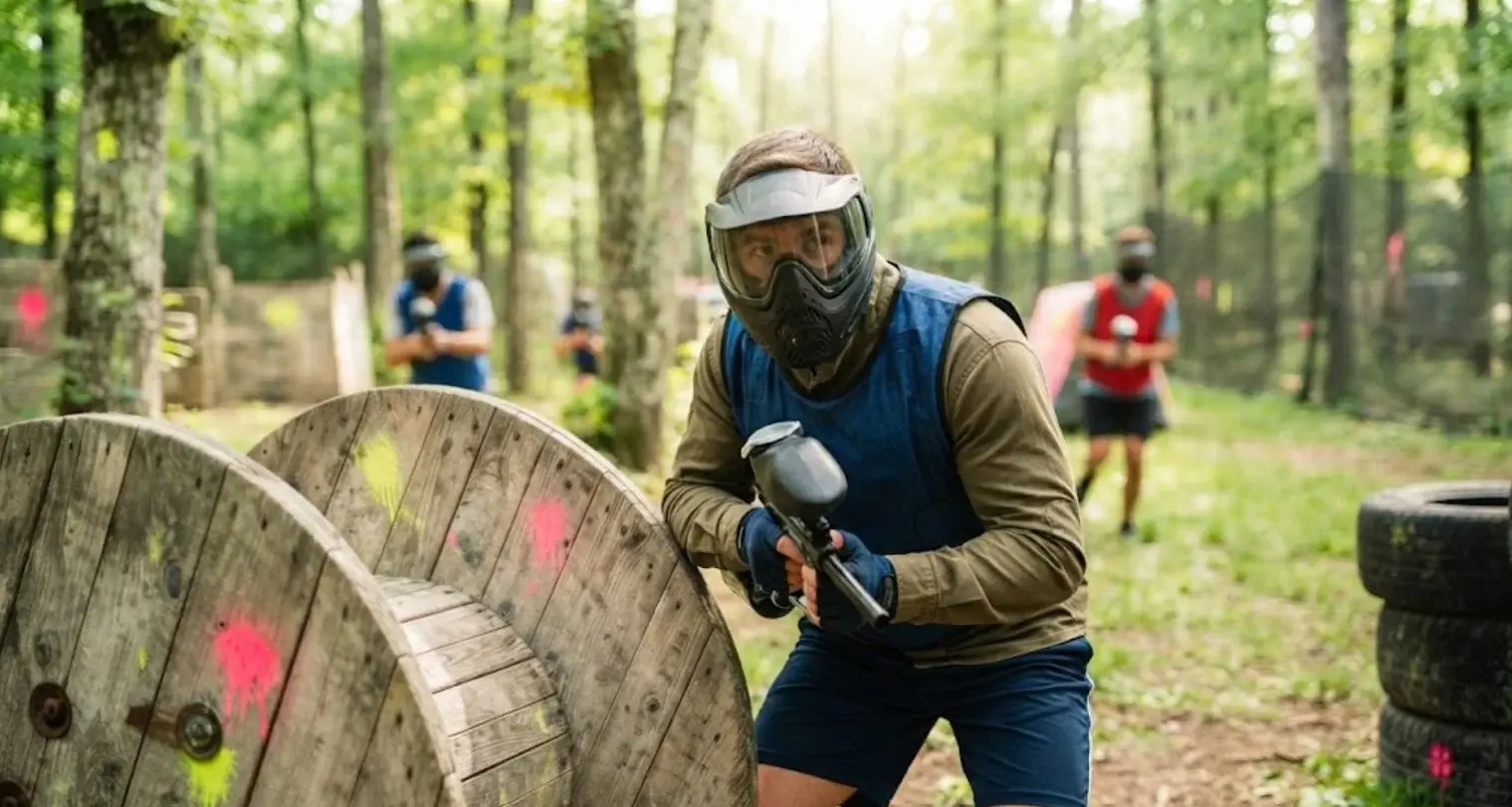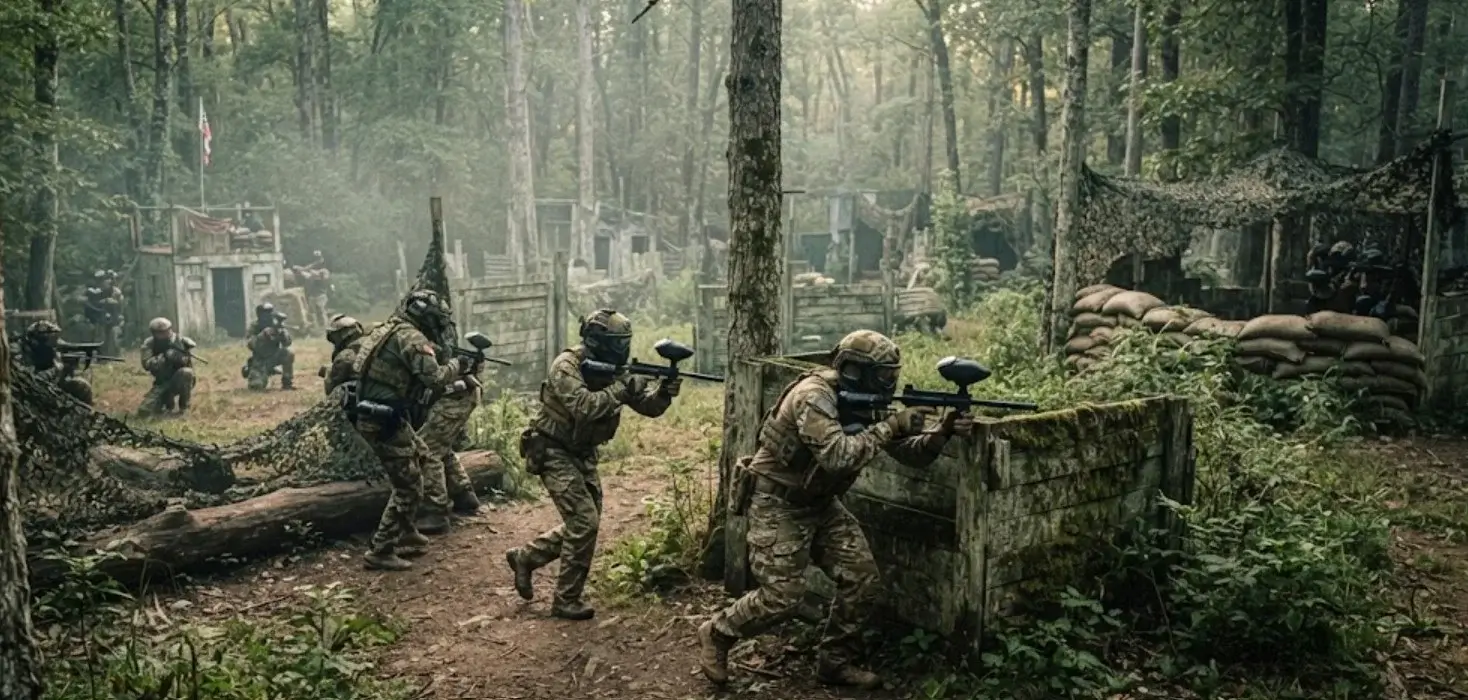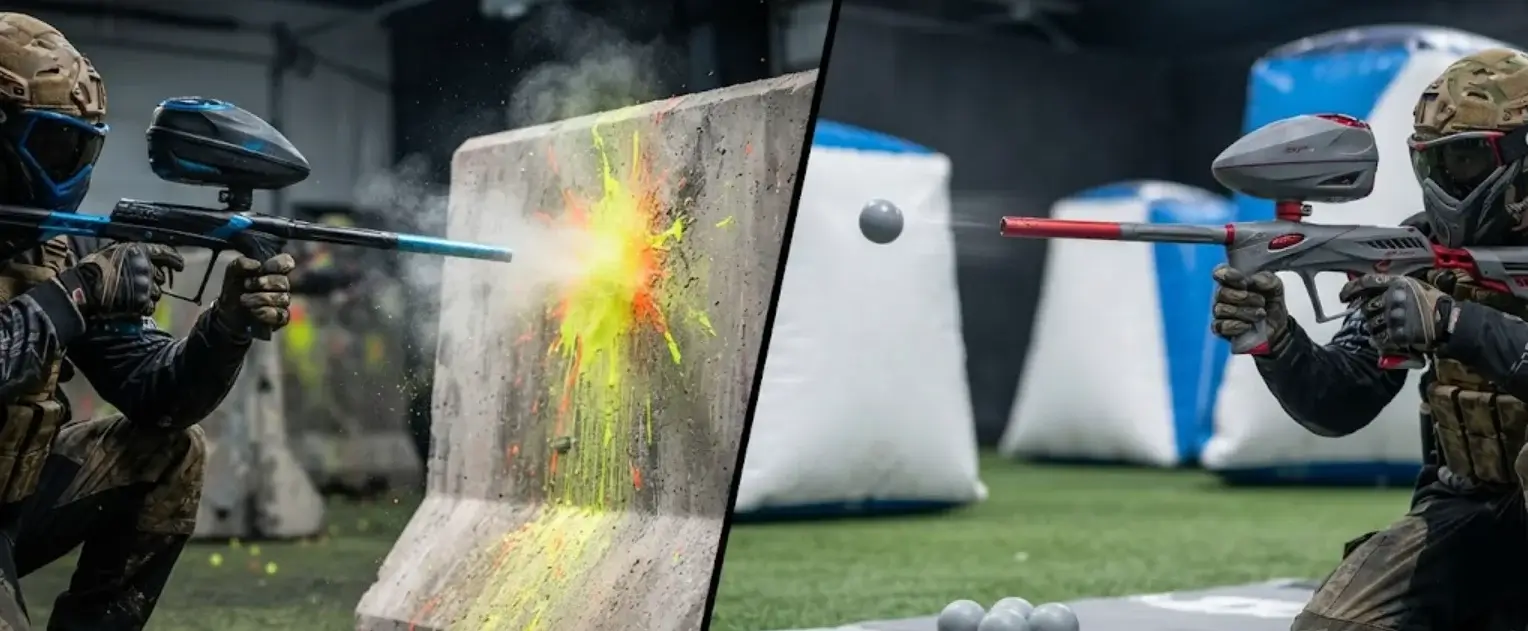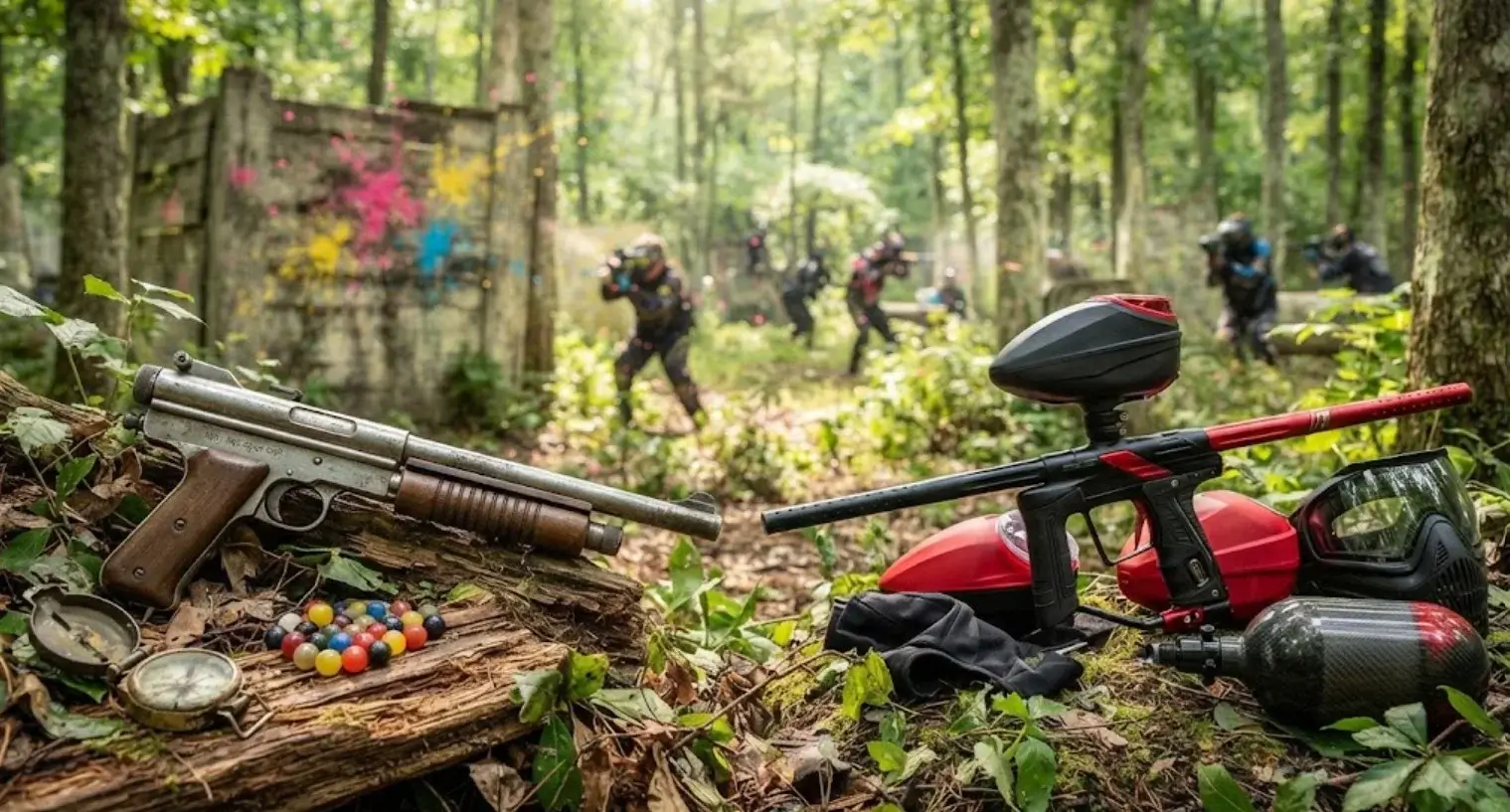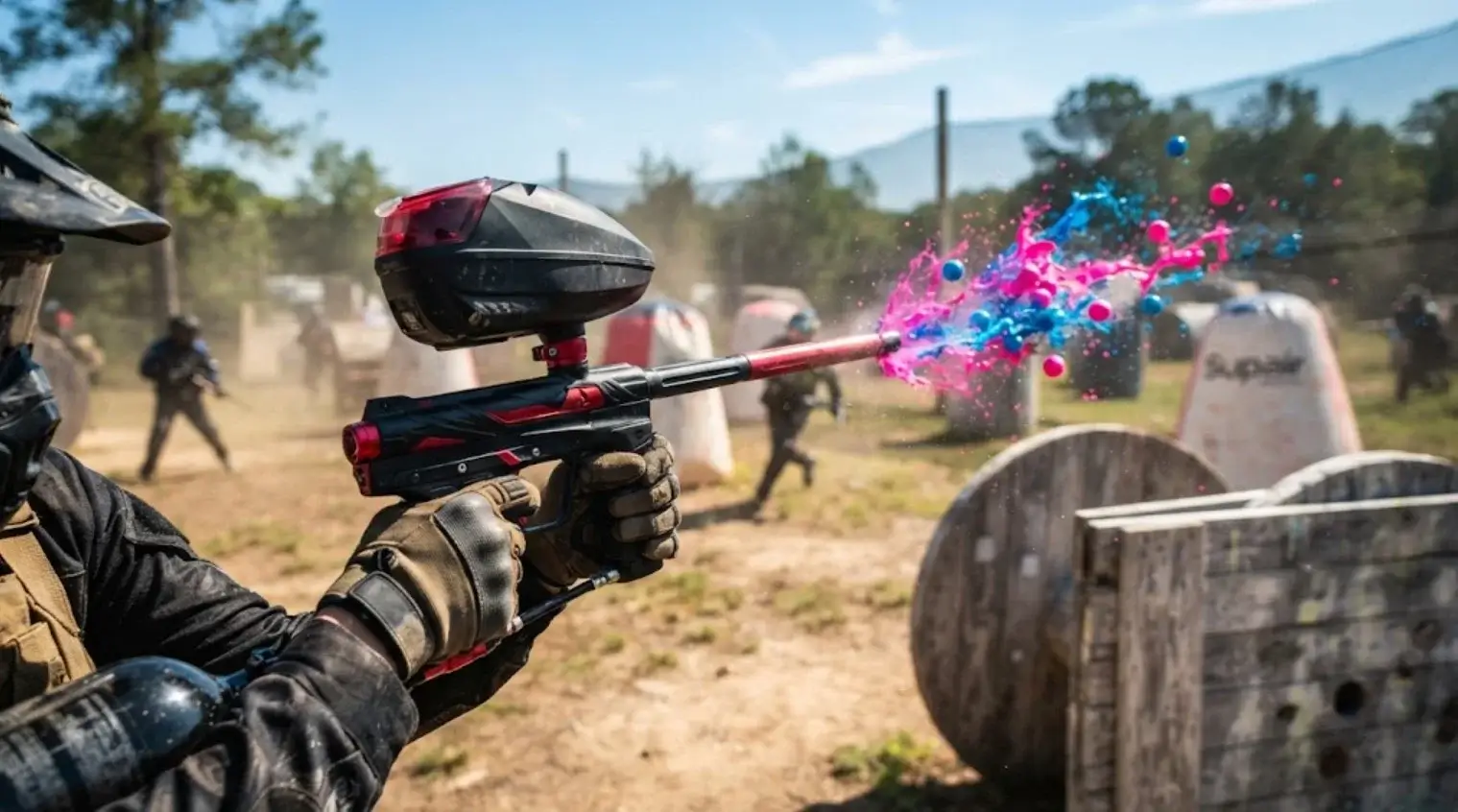
A normal paintball game may ask you to capture a flag or eliminate the other team. Scenario paintball gives those shots a bigger purpose.
You might be protecting a commander, recovering a prop, or holding an objective for your faction. The action connects through missions, scoring, and an ongoing storyline rather than resetting after every short round.
What Is Scenario Paintball?
Scenario paintball is a story- or mission-based form of paintball where opposing factions complete objectives to earn points and advance the game.
Instead of focusing only on eliminations, scenario paintball games usually connect several missions through a theme or storyline. Players may attack locations, recover props, escort characters, or defend important objectives.
A paintball scenario is the situation or mission being played. The phrase can also describe the wider event, so players often use paintball scenario game and scenario paintball game interchangeably.
What matters is the structure.
A typical scenario includes:
- A storyline or theme
- Two or more factions
- Missions and objectives
- A command structure
- Special roles or props
- A scoring system
- Respawn or reinsertion rules
Scenario games also tend to run much longer than ordinary recreational rounds. Some continue for several hours, while larger events can stretch across a full day or weekend.
That extra time changes the goal. Shooting opponents helps, but completing the mission usually matters more.
As scenario players quickly learn, collecting eliminations while ignoring the objective is a little like celebrating a touchdown in the wrong end zone.
How Does a Scenario Paintball Game Work?
Every event has its own scenario rules, but most follow a recognizable structure.
The game director or scenario producer creates the storyline, objectives, scoring rules, and special mechanics. Players then work within their faction to complete missions and build an overall score.
Teams and Factions
Players normally join opposing factions rather than playing as small temporary teams.
A faction may have a commander or general who receives information and directs the overall game plan. Larger groups can also divide into squads with squad leaders.
A simple structure might look like this:
Commander → Squad Leader → Players
The command structure becomes useful when several objectives are active at once.
One squad might defend a base while another retrieves a mission prop. Meanwhile, the commander must decide which objective deserves more players.
That coordination is one reason scenario gameplay feels different from a short recreational match.
Missions and Objectives
Missions give the storyline something concrete to accomplish.
A scenario mission may ask players to capture an objective, recover an item, escort a character, defend territory, or complete another assigned task.
Some events issue mission cards or provide assignments through commanders. Missions may also have specific start times, deadlines, or point values.
Objectives can include:
- Primary missions that strongly affect the score
- Secondary objectives that provide extra points
- Side missions that give smaller groups something useful to accomplish
- Territory or control points that must be held
This creates an important mindset shift.
The question is no longer simply, “How many players can I eliminate?”
It becomes, “What does my faction need right now?”
Special Roles and Props
Some scenario paintball games add special player roles.
Common examples include:
- Medic
- Engineer
- Demolitions specialist
- Spy
- Scenario character
- Commander
Their abilities depend entirely on the event rules.
For example, a medic may be allowed to return an eliminated teammate to play. An engineer or demolitions player might be required to operate a particular scenario prop.
Props can include briefcases, documents, flags, containers, maps, or other physical objects created for a mission.
They are not just decorations.
A prop may need to be recovered, defended, delivered, or brought back to a command post for points. Some organized scenario rules even make collected props part of the final score.
Scoring, Elimination, and Respawn
Getting hit usually does not mean sitting out for the rest of a long scenario event.
Many games use a respawn or reinsertion system. An eliminated player may return to a designated respawn point and enter the game again according to event rules. Some scenarios also use medic mechanics.
Scoring varies more.
Mission completion may award points. Holding territory, capturing an objective, or recovering a scenario prop can also contribute to the team score.
At the end, completed missions and other scoring elements determine the overall result.
This is why a faction can win without dominating every firefight.
Objectives win scenario games. Eliminations often help you complete those objectives.
Different Paintball Scenarios and Missions
The best paintball scenarios give both factions something meaningful to accomplish.
Rather than running unrelated mini-games, strong scenario design connects missions to the larger storyline.
Here are some of the most common paintball scenarios you may encounter.
Capture and Hold
A faction must capture a designated control point and keep possession of it.
Points may depend on how long the position remains under friendly control. That means taking the objective is only half the job.
Holding it is usually harder.
Base Attack and Defense
One faction receives an objective to attack a position while the opposing faction must defend it.
The mission could involve controlling the base, removing a prop, reaching a specific location, or holding the area until time expires.
It creates a clear clash between attack and defense without requiring complicated rules.
Prop Retrieval
Players must locate a mission prop and transport it to a designated objective or command post.
The interesting part is often the return journey.
Finding the object might be easy. Carrying it through contested territory while the opposing faction knows what you are doing is another story.
Modern scenario events commonly use physical props as part of mission and scoring systems.
VIP or Hostage Mission
A team may need to escort a VIP, protect a scenario character, or recover a hostage from another location.
The designated character becomes part of the objective, so simply clearing opponents from the area may not complete the mission.
Players have to think about movement, protection, and timing.
Sabotage Mission
A sabotage mission usually requires players to reach an opposing objective and interact with a designated prop or location.
The event rules define what counts as successful sabotage.
Some games may restrict certain interactions to a specific player role, such as an engineer or demolitions specialist.
Larger paintball game scenarios can combine several of these ideas.
A faction might first retrieve a prop, use it during a sabotage mission, and then defend the captured objective. That connected progression is where scenario paintball becomes especially engaging.
What Makes Scenario Paintball Different From Regular Paintball?
Regular recreational paintball often uses short rounds with one clear goal.
Scenario paintball connects gameplay across a larger objective.
| Regular Paintball | Scenario Paintball |
| Usually short individual rounds | Often extended, connected gameplay |
| Simple win condition | Multiple missions and objectives |
| Basic team organization | Factions may use commanders and squads |
| Elimination can end your round | Respawn or reinsertion is common |
| Little or no storyline | Storyline or theme can guide gameplay |
| Win the current round | Missions contribute to an overall score |
The clearest difference is purpose.
In regular play, eliminating the opposing team may be the objective itself. In scenario paintball, eliminating opponents often creates an opportunity to complete something more important.
That might mean capturing territory, moving a prop, protecting a character, or finishing a mission.
What to Expect in Your First Scenario Paintball Game
A first scenario event can look complicated from the outside.
Once the game starts, your job is usually much simpler: understand your current objective and help your faction complete it.
Expect the day to include some version of:
- Registration and event briefing
- Faction or squad assignment
- Explanation of scenario rules
- Initial mission briefing
- Gameplay and objective attempts
- Respawn or reinsertion after elimination
- New missions as the scenario continues
- Final scoring
Event-specific rules matter more here than assumptions from normal recreational play.
Read the briefing carefully. Know where your reinsertion point is. Find out how mission props work. If you receive a special player role, understand exactly what that role allows.
One practical mistake beginners make is becoming absorbed in a firefight that has little to do with their objective.
Paint flying everywhere feels important.
Sometimes the smartest play is simply getting three players and one battered briefcase to the correct building.
Long scenario paintball games also reward sensible pacing. Follow the field’s safety requirements, keep your approved eye and face protection on in required areas, stay hydrated, and listen to event staff.
Rules differ from one producer to another, so the organizer’s published rules always take priority over general advice.
FAQs About Scenario Paintball
How long do scenario paintball games last?
Scenario games often last several hours and can continue for a full day or longer.
Large events may divide gameplay into several periods across a weekend. The exact schedule depends on the scenario producer and field.
Do you have to role-play in scenario paintball?
No.
Some players enjoy costumes, characters, and deeper role-playing. Others simply join their faction, complete missions, and play paintball.
Special scenario characters may have story responsibilities, but ordinary players usually do not need to stay “in character” unless the event specifically requires it.
Do all scenario paintball games use the same rules?
No.
Each scenario producer can create different rules for missions, scoring, player roles, props, medics, respawns, and reinsertion.
Always read the specific event rules before playing. A mechanic used at one field may work completely differently at another.
Scenario paintball makes more sense once you stop thinking of it as a longer elimination game.
It is paintball built around a larger objective. Storylines give context, factions create organization, missions move the game forward, and scoring decides whether all that shooting actually accomplished something.
For readers exploring scenario play on Paintball Renegade, that is the key idea to remember: play the mission first. The paintball battle exists to support it.