Mechanical paintball has a certain charm. No battery to charge, no circuit board to blame, and no software update waiting before the first game. You pull the trigger, the marker responds, and the focus returns to the field.
For many players, that direct connection matters more than having the fastest possible firing system. The best mechanical paintball markers combine reliability, simple operation, and consistent performance without unnecessary complexity.
In this guide, I break down how mechanical markers work, what separates basic models from premium designs, and which markers make sense for different types of players.
Why Mechanical Paintball Markers Still Matter Today
Electronic markers often get attention because of speed and tournament features. However, mechanical paintball markers continue to hold their ground because they solve a different problem.
They are built around reliability.
A mechanical paintball marker uses physical movement and air pressure instead of electronic controls. This means fewer components can fail during a long day at the paintball field.
That matters when you are halfway through a scenario game, covered in mud, and your gear is getting treated like it joined a wrestling match.
Players choose mechanical markers because they offer:
- Simple operation
- No batteries required
- Easier troubleshooting
- Lower maintenance demands
- A more traditional shooting feel
A good mechanical marker does not try to replace electronic technology. It offers a different experience.
Many experienced players still enjoy the feeling of a mechanical trigger because every shot feels connected to the marker rather than a programmed firing system.
The Hidden Difference Between Cheap and Premium Mechanical Markers
The word “mechanical” covers a wide range of designs.
A beginner often assumes all mechanical paintball guns work the same way. They do not.
Two markers can both be semi-automatic mechanical systems while feeling completely different in your hands.
Entry-level mechanical markers usually rely on simpler blowback designs. These systems are popular because they are affordable, durable, and easy to understand.
Typical characteristics include:
- More noticeable recoil
- Basic internal systems
- Straightforward maintenance
- Reliable performance
Premium mechanical markers usually use more advanced pneumatic or spool valve systems.
These designs focus on smoother cycling, better air efficiency, and a more refined shooting experience.
The difference is noticeable.
A budget marker may feel like a reliable pickup truck. It starts every morning and gets the job done.
A premium mechanical marker feels more like a tuned machine. It responds faster, feels smoother, and requires less effort during extended play.
How a Mechanical Paintball Marker Fires a Shot
Understanding the firing mechanism helps explain why some markers feel better than others.
When you pull the trigger on a mechanical paintball gun, several parts work together.
The basic firing cycle looks like this:
- The trigger activates the trigger assembly.
- The firing mechanism releases stored energy or air pressure.
- The valve releases compressed gas.
- The bolt moves forward and pushes the paintball through the barrel.
- The marker resets for the next shot.
Important internal parts include:
- Trigger mechanism
- Trigger frame
- Sear mechanism
- Bolt system
- Valve system
- Hammer or striker system
- Air pressure system
Different manufacturers arrange these components differently. That design choice affects recoil, trigger pull, consistency, and overall shooting experience.
A marker with smoother internal movement usually feels easier to control during repeated shots.
Best Mechanical Paintball Markers Compared
| Marker | Best For | Main Advantage |
| Planet Eclipse EMEK 100 | Players wanting premium mechanical performance | Smooth pneumatic operation |
| Tippmann Cronus Tactical | Beginners and recreational players | Durability and simplicity |
| Tippmann A-5 | Woodsball and scenario players | Customization and proven reliability |
| Spyder Victor | Budget beginners | Affordable entry into mechanical paintball |
Planet Eclipse EMEK 100: The Premium Mechanical Marker Experience

Some players start with rental equipment and eventually reach a point where they want something that feels completely different.
That is where the Planet Eclipse EMEK 100 stands out.
The EMEK 100 is designed for players who want the simplicity of a mechanical marker without sacrificing smooth performance.
It uses the Gamma Core drivetrain and a pneumatic firing system that creates a softer shooting experience compared with many traditional blowback markers.
In real-world use, players commonly notice:
- Smooth trigger operation
- Low recoil feel
- Consistent shots
- Quiet cycling
- Reduced maintenance compared with many older mechanical designs
The marker is lightweight and comfortable during long games. That matters more than many buyers realize. Carrying a heavy marker for several hours changes how you play.
The EMEK 100 works especially well for:
- Serious beginners
- Recreational players upgrading from rentals
- Players who want a high-end mechanical marker
It is not the ideal choice for someone who only plays once a year and wants the cheapest possible setup.
The main trade-off is air compatibility. The EMEK 100 is designed for compressed air rather than CO2, so players need the correct air setup.
Compared with basic mechanical paintball guns, it offers a much more refined shooting experience.
My verdict: The Planet Eclipse EMEK 100 is one of the strongest choices for anyone who wants a premium mechanical paintball marker without moving into electronic territory.
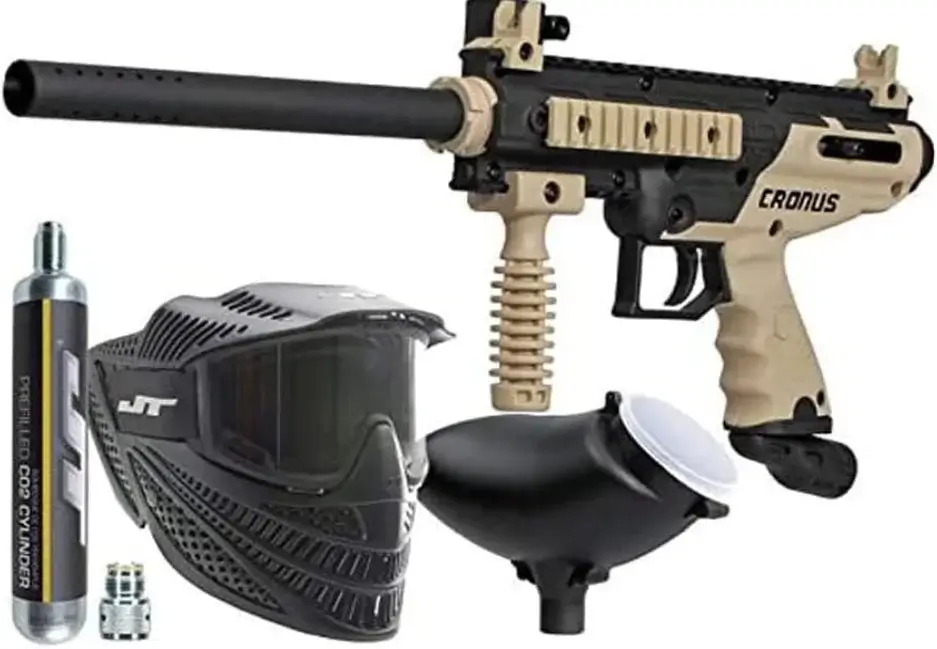
Tippmann Cronus Tactical: The Reliable Workhorse
Some players do not need a fancy marker. They need something that can survive being dragged through woods, dropped in gear bags, and used game after game.
That is where the Tippmann Cronus Tactical earns its reputation.
The Cronus uses an inline bolt system and a durable composite body. It is designed around simplicity and field reliability.
Players usually appreciate:
- Easy setup
- Comfortable handling
- Tactical design
- Beginner-friendly operation
- Good durability
The Cronus fits naturally into woodsball and scenario games where reliability matters more than tournament-level speed.
A common real-world advantage is that newer players can learn the basics without feeling overwhelmed by complicated adjustments.
It is not designed to feel like a premium pneumatic marker. The trigger response is more basic, and the marker is heavier than some modern designs.
Compared with the EMEK 100, the Cronus feels more rugged and practical rather than refined.
My verdict: The Tippmann Cronus Tactical is one of the best mechanical paintball markers for beginners who want a dependable first marker.
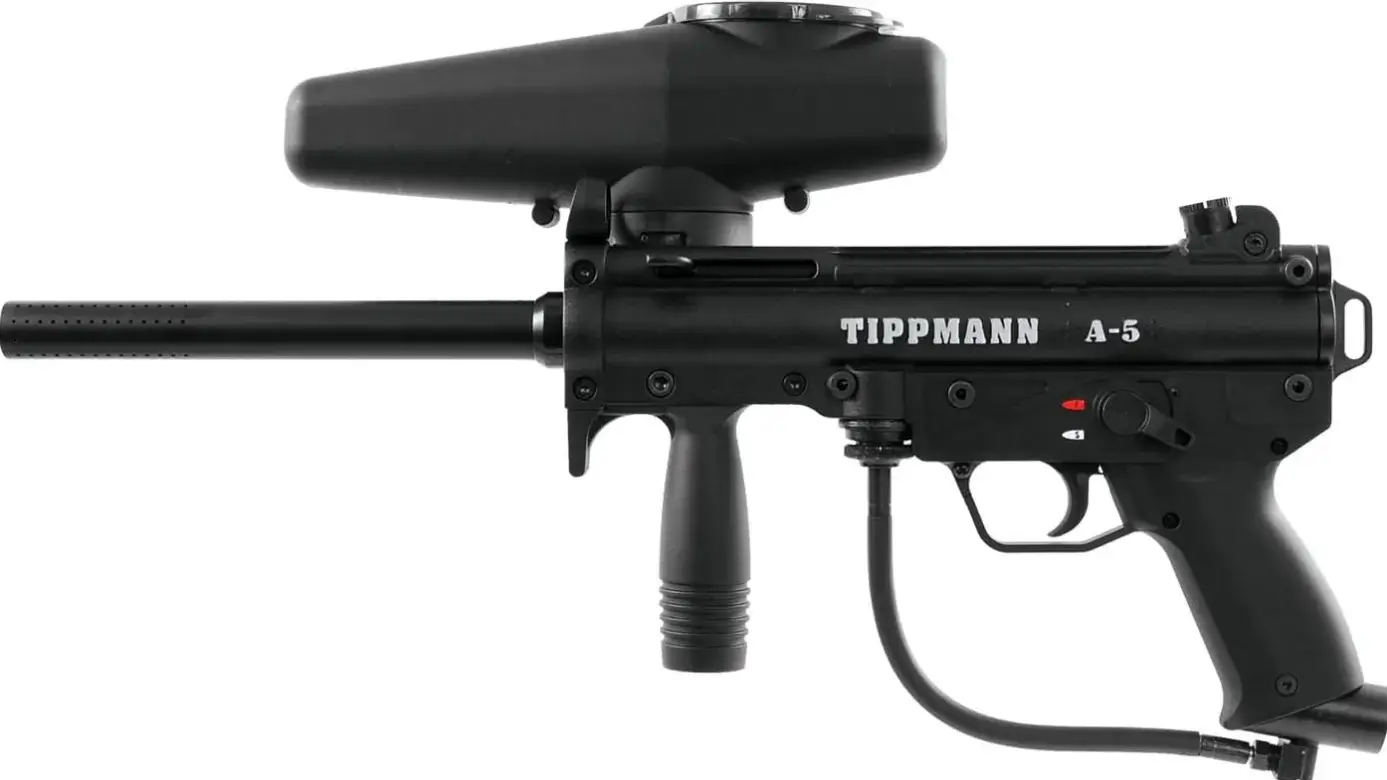
Tippmann A-5: A Classic Woodsball Favorite
Some paintball markers become popular because they simply refuse to disappear.
The Tippmann A-5 is one of those markers.
Built around durability and customization, the A-5 remains popular among scenario players and woodsball fans.
Its biggest strengths include:
- Cyclone Feed System
- Durable construction
- Strong aftermarket support
- Easy field maintenance
The A-5 is designed for players who enjoy customizing their setup. Many owners add different barrels, grips, and accessories to create a marker that matches their playing style.
It feels at home during long outdoor games where equipment takes abuse.
The downside is weight. Compared with newer lightweight mechanical markers, the A-5 can feel bulky during extended matches.
Compared with modern premium markers, it sacrifices some smoothness for ruggedness.
My verdict: The Tippmann A-5 remains a strong option for players who value durability, customization, and classic woodsball performance.
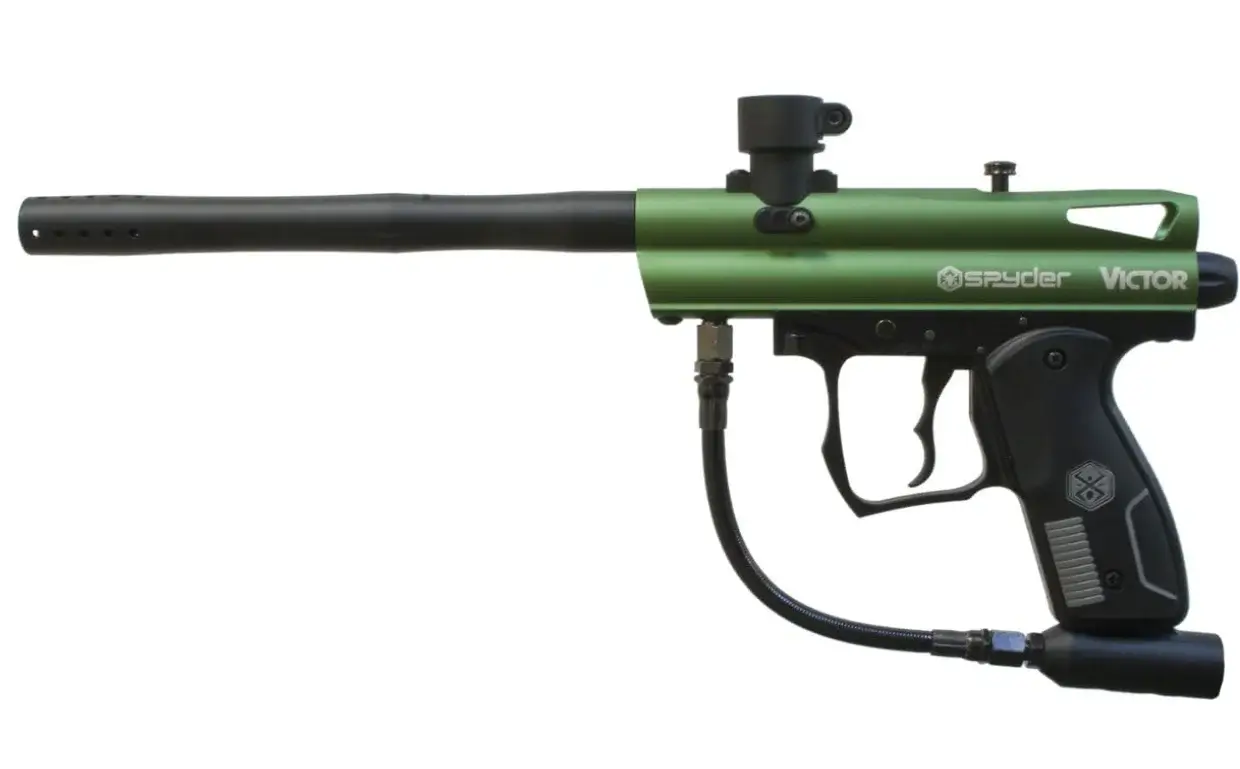
Spyder Victor: The Simple Starting Point
Not every player needs a premium marker immediately.
The Spyder Victor exists for players who want an affordable way into mechanical paintball.
It uses a simple semi-automatic design and supports common air options, making it approachable for beginners.
Its advantages include:
- Low learning curve
- Simple operation
- Lightweight design
- Affordable ownership
For casual backyard games or occasional paintball trips, the Spyder Victor can make sense.
However, it does not offer the same refinement or durability as higher-end mechanical markers. Some users report durability concerns over long-term heavy use.
Compared with the Tippmann models, it feels more like an entry-level tool rather than a long-term platform.
My verdict: The Spyder Victor is a reasonable starting point for casual players, but frequent players may quickly want something more advanced.
What Separates a Great Mechanical Marker From an Average One?
The best mechanical paintball marker is not always the one with the longest feature list.
Small details change the experience.
Trigger Feel
The trigger is where you interact with the marker.
Important factors include:
- Trigger pull weight
- Trigger response
- Single trigger or double trigger design
- Trigger frame comfort
A smoother trigger helps players shoot naturally without fighting the marker.
Air Efficiency
Air management affects how long you can stay on the field.
Markers may use:
- CO2 tanks
- Compressed air tanks
- Regulators
- ASA adapters
Premium designs often focus on using air more efficiently and consistently.
Shooting Consistency
Accuracy is not only about the barrel.
Consistency depends on:
- Valve design
- Bolt movement
- Air pressure control
- Paint quality
- Barrel system
A well-maintained mechanical marker can perform extremely well.
Mechanical Markers Built for Different Battlefields
Different games reward different marker characteristics.
Woodsball and Scenario Games
Players who spend hours outdoors usually value durability.
Strong choices include:
- Tippmann Cronus
- Tippmann A-5
These markers handle rough conditions and allow customization.
Speedball Style Play
Speedball demands lighter equipment and consistent shooting.
A smoother mechanical marker such as the EMEK 100 fits players who enjoy controlled, accurate shooting.
Recreational Play
Casual players usually need reliability without unnecessary complexity.
Affordable options like the Spyder Victor can work well for occasional games.
The Mechanical Marker Ownership Experience
Mechanical markers are popular because ownership is usually straightforward.
There are fewer electronic components, which makes troubleshooting easier.
Basic care includes:
- Cleaning the barrel
- Checking O-rings
- Inspecting air connections
- Lubricating moving parts
- Storing the marker properly
Common parts players eventually pay attention to include:
- Bolt
- Valve
- Springs
- Internal components
Upgrades can improve certain markers, but upgrades do not always transform a basic marker into a premium one.
Sometimes the smartest upgrade is simply learning your marker better.
At Paintball Renegade, I focus on helping players understand the difference between buying more gear and buying the right gear.
Final Verdict: Which Mechanical Paintball Marker Should You Buy?
There is no single mechanical marker that fits every player.
My recommendations:
- Best overall mechanical paintball marker: Planet Eclipse EMEK 100
- Best beginner mechanical marker: Tippmann Cronus Tactical
- Best woodsball mechanical marker: Tippmann A-5
- Best affordable starter marker: Spyder Victor
Mechanical paintball markers remain popular because they keep the game focused on skill, timing, and reliability.
The right marker is not the one with the most features. It is the one that disappears in your hands and lets you focus on the next shot.
FAQs About Mechanical Paintball Markers
Are all mechanical paintball guns the same?
No. Mechanical markers vary significantly in firing design, trigger feel, air efficiency, and internal systems.
How does a mechanical paintball gun work?
A mechanical marker uses trigger movement and air pressure to activate the firing cycle without electronic controls.
Can mechanical paintball markers shoot fast?
Yes. Skilled players can shoot quickly with mechanical markers, although electronic markers usually offer higher firing rates.
Do mechanical paintball markers need batteries?
No. Mechanical markers operate without batteries.
What is the best mechanical paintball gun under $200?
The best choice depends on availability and use case. Entry-level Tippmann and Spyder models are common options, while premium models provide better long-term performance.