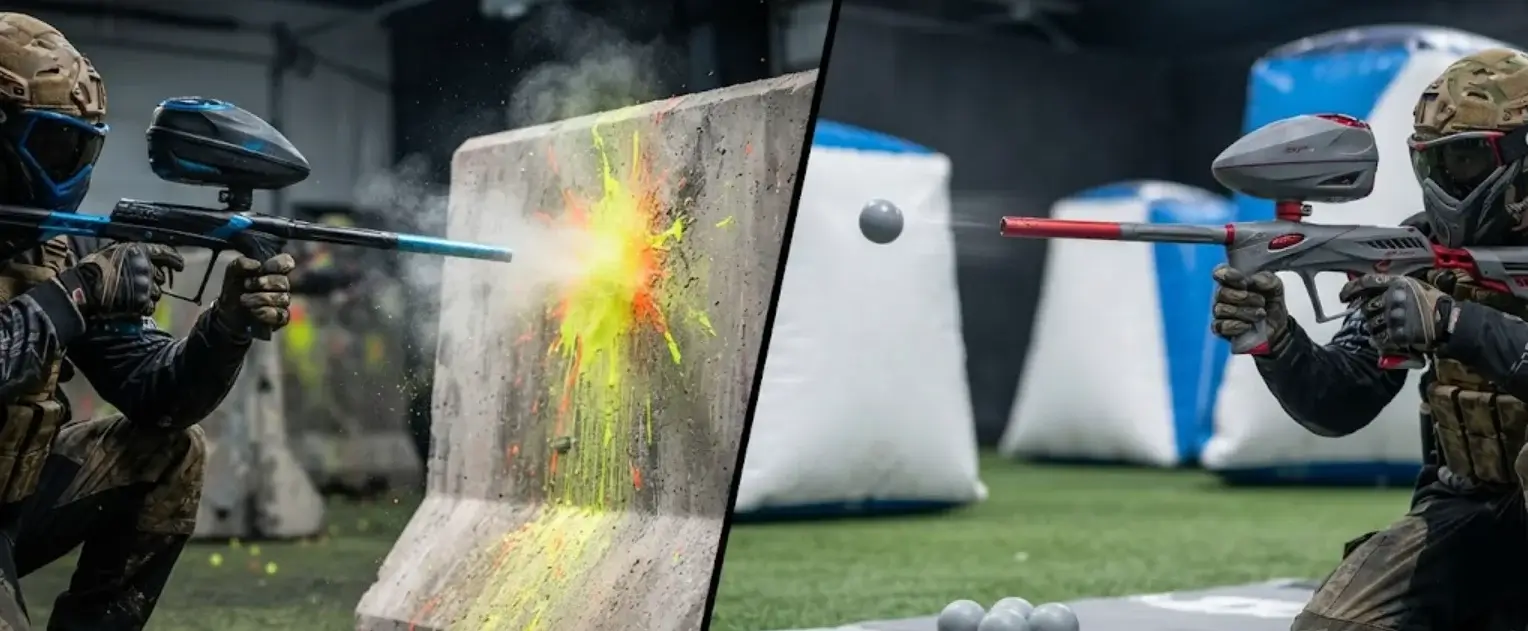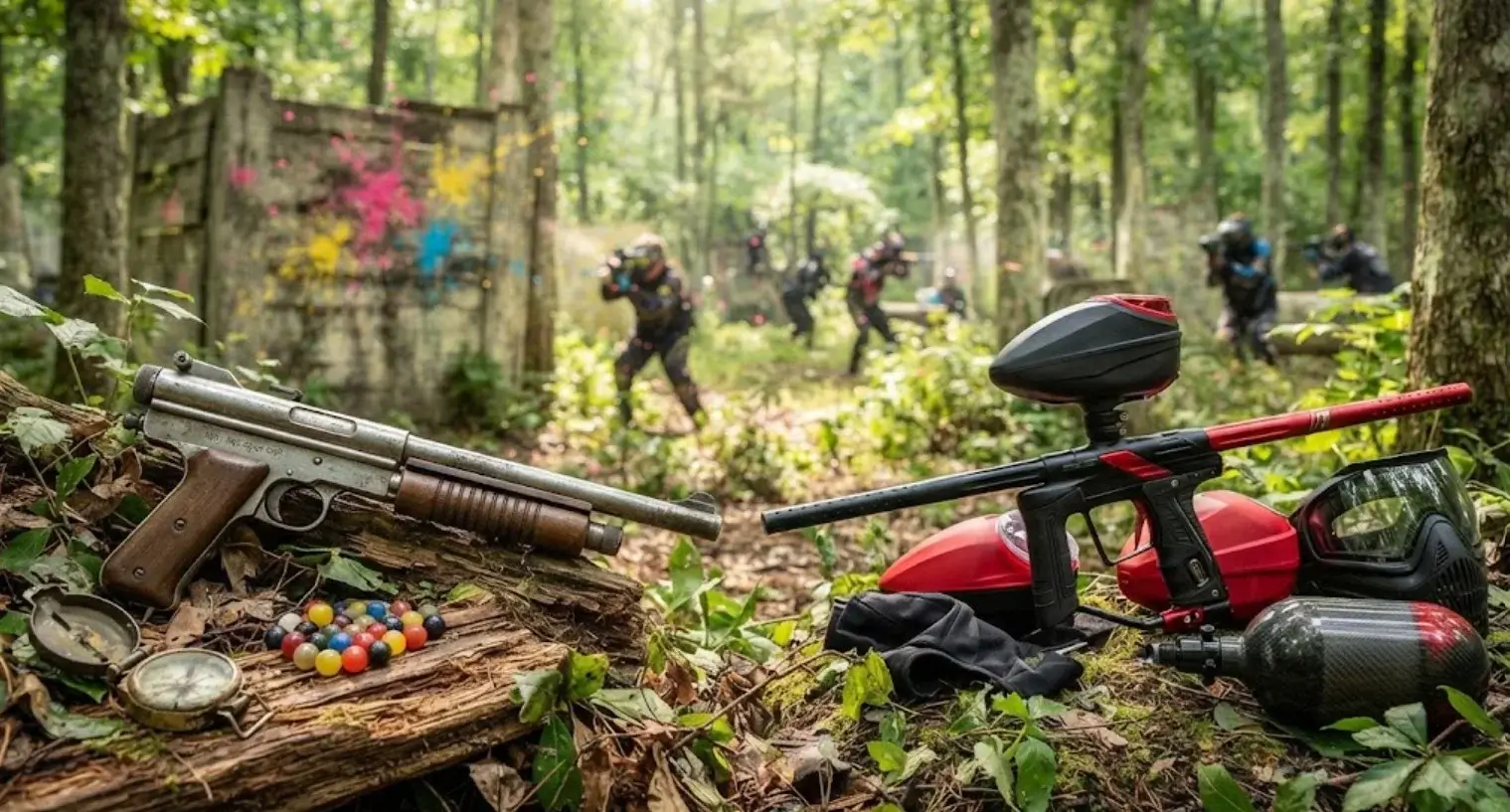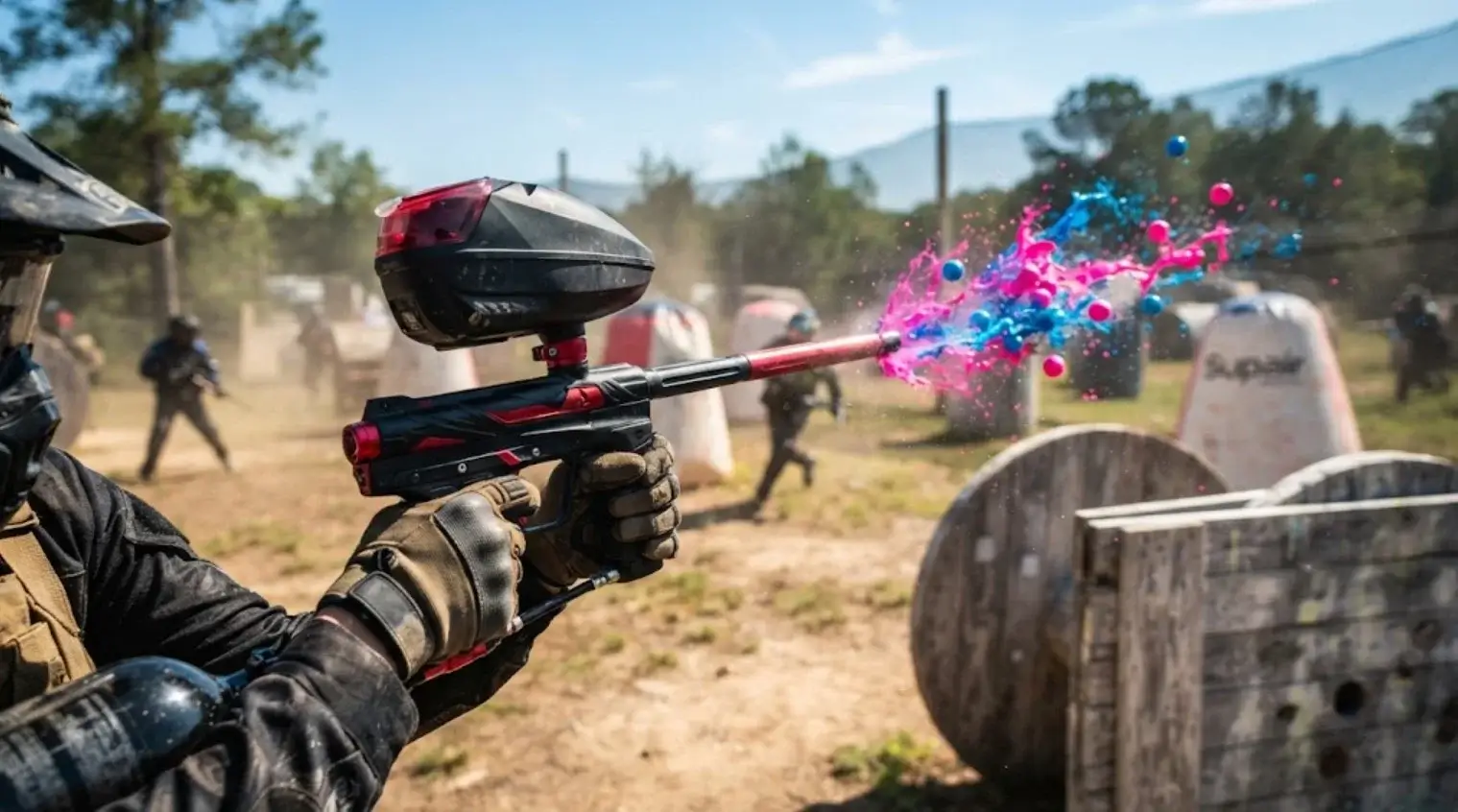
Reball looks like paintball until the first shot lands and nothing splatters. Instead of breaking open, the ball usually stays intact and can be collected for another round.
That simple difference changes cleanup, training, hit confirmation, and even how you use your equipment. Here is what reball paintball actually is and how it compares with traditional paintball.
What Is Reball in Paintball?
Reball is a paintless form of paintball that uses reusable synthetic projectiles instead of paint-filled balls. You fire them from compatible paintball equipment, but they are designed to remain intact after impact.
Reball USA describes genuine Reball® as a reusable, synthetic, paintless paintball. The company also states that Reballs work with standard paintball gear.
So, what is a Reball in simple terms?
Think of it as a reusable practice ball made for paintball markers. You shoot it, collect it, clean it when necessary, and use it again.
The term Reball® refers to the branded product. People sometimes use “reball” more loosely when discussing reusable paintless balls, but not every rubber or synthetic ball is necessarily a genuine Reball.
That distinction matters when comparing specifications, durability, feeding, or manufacturer instructions.
What Are Reballs Made Of?
Reball describes its genuine projectiles as synthetic paintless balls. They are solid rather than hollow, paint-filled shells.
A conventional paintball works differently. It has a breakable outer shell surrounding a colored fill. When it hits with enough force, the shell breaks and creates a visible mark.
A Reball normally remains intact instead.
That is why it can be reused and why you do not end practice looking like someone attacked you with a box of highlighters.
How Does Reball Paintball Work?
The basic shooting process feels familiar if you already understand paintball. The important change is the projectile, not the entire marker system.
A typical Reball cycle looks like this:
- Load clean Reballs into a compatible hopper or magazine.
- The paintball marker fires them using its normal air system.
- The Reball travels toward the target.
- It normally bounces or stays intact after impact.
- Players collect the balls afterward.
- Dirty Reballs are cleaned, dried, inspected, and used again.
Because there is no paint fill to burst, Reball works well for repetitive training.
Reball USA specifically lists snap shooting, target shooting, shooting while moving, off-hand practice, and marker or hopper testing among its uses.
Reball vs Paintball: What Is the Difference?
At first glance, Reballs and paintballs perform the same basic job. A marker launches both toward a target. What happens before and after impact is where the differences become important.
| Factor | Reball | Regular Paintball |
| Projectile | Reusable synthetic ball | Paint-filled ball |
| Paint fill | None | Yes |
| Impact | Usually remains intact | Designed to break |
| Visible hit | Usually no paint mark | Paint can confirm the hit |
| Reusability | Reusable | Single use |
| Cleanup | Little paint mess | Paint and shell residue |
| Common use | Training, drills, testing, some games | Recreational and competitive play |
| Equipment | Works with compatible paintball gear | Standard paintball equipment |
The biggest difference between paintball and Reball is therefore not simply what the projectile is made from.
It is what happens when that projectile lands.
A regular paintball is supposed to break under the right conditions. A Reball is supposed to survive so you can recover it.
Hit Confirmation Changes the Game
Paint gives regular paintball a built-in method of confirming many hits.
If a paintball breaks on a player, the mark is usually easy for the player or referee to see.
Reball does not provide the same obvious visual evidence. A player may feel or hear the impact, but there is no bright splatter saying, “Yep, that one counted.”
That makes honesty and refereeing more important in player-versus-player Reball games.
It is also one reason Reball makes especially good sense for drills and target work, where marking another player is not the main goal.
Does Reball Hurt More Than Paintball?
A common assumption is that a reball paintless paintball must hurt less because there is no paint inside.
That is not a safe assumption.
Reball USA states that genuine Reballs do not hurt more than regular paintballs. However, player experiences are mixed, especially when comparing different velocities and reusable projectile types. A recent paintball community discussion included players describing similar impacts at reduced Reball velocities and others reporting harder hits when Reballs were fired faster.
In real play, Reball vs paintball pain can depend on several things:
- Shot velocity
- Shooting distance
- Hit location
- Clothing
- Protective gear
- Projectile weight and condition
- The specific reusable ball being used
So, does Reball hurt?
Yes, it can. It is still a projectile fired from a paintball marker.
Paintless does not mean painless.
Always use proper paintball eye and face protection, follow the venue’s velocity limits, and chronograph equipment when required.
Reball vs Paintball Performance: Do They Shoot the Same?
Reballs are designed to give players useful paintball practice without consuming a new paintball every shot.
That does not make a Reball physically identical to fresh paint.
Genuine Reball is listed by the manufacturer as having a .680 bore. Conventional .68 caliber paintballs can also vary somewhat in actual diameter, so bore fit still matters.
Several factors can affect how reusable balls behave:
- Bore fit: A poor match can affect consistency.
- Ball condition: Repeated impacts may eventually affect shape or surface condition.
- Cleanliness: Dirt can influence feeding and shot consistency.
- Accuracy: A clean, round Reball should behave more predictably than a worn or misshapen one.
- Impact behavior: Reballs generally bounce rather than break like paint.
This matters most during serious practice.
If you are working on snap shooting, for example, you want the ammunition to behave consistently enough that bad shots reveal problems in your technique, not just problems with dirty balls.
Can a Paintball Gun Shoot Reballs?
Yes, standard compatible paintball markers can generally shoot genuine Reballs.
Reball USA says its Reballs work with standard paintball gear and lists a .680 bore specification.
However, “the marker can fire it” and “every setup will feed it flawlessly” are not quite the same statement.
Your results can depend on:
- Reball size and condition
- Barrel and bore fit
- Hopper design
- Magazine design
- Feed system
- Marker setup
This becomes more important once Reballs have been used repeatedly.
Do All Hoppers and Magazines Feed Reballs the Same Way?
Not necessarily.
Players have reported situations where Reballs fed reliably through one setup but caused trouble in another. Magazine-fed systems can be particularly sensitive to worn or misshapen reusable balls.
In one paintball community discussion, players specifically reported feeding problems with heavily used Reballs in certain magazines. Another discussion involved Reballs sticking or jamming in a loader even though standard paint fed normally.
These are player reports, not universal rules, but they illustrate an important point:
Projectile condition matters more when you reuse the same ammunition repeatedly.
If feeding becomes unreliable, inspect the Reballs before assuming the marker itself is broken.
How Are Reballs Cleaned and Reused?
Reusability is one of the main reasons Reball exists, but reusable does not mean maintenance-free.
Dirt eventually follows anything that spends enough time rolling around a paintball floor.
Reball USA recommends washing genuine Reballs after use. According to its instructions, they can be rinsed with water and then left to air-dry. The manufacturer says soap and scrubbing are not necessary.
A simple routine works well:
- Collect the Reballs.
- Remove obvious debris.
- Rinse dirty balls with water.
- Let them air dry completely.
- Check each batch for damaged or misshapen balls.
- Remove questionable balls before the next session.
There is another important manufacturer instruction: do not lubricate genuine Reballs. Reball USA warns that lubricant can damage them.
That advice applies specifically to genuine Reball products. Do not assume every reusable projectile uses identical maintenance instructions.
When Should You Use Reball Instead of Regular Paintball?
Reball is most useful when the goal is repetition rather than visible elimination.
You want to practice the shot 50 more times? That is exactly where reusable ammunition starts making sense.
Reball Makes More Sense For
Reball can be useful for:
- Target practice
- Repeated shooting drills
- Snap shooting
- Shooting while moving
- Practicing with either hand
- Marker testing
- Hopper testing
- Indoor practice where paint mess is undesirable
The manufacturer itself promotes Reball for many of these practice uses.
The biggest advantage is simple. You can repeat a drill without throwing away another ball after every trigger pull.
Regular Paintball Makes More Sense For
Traditional paintballs remain better suited to situations where breaking and visible marking are part of the game.
That includes:
- Standard recreational matches
- Games relying on visible hit confirmation
- Competitive formats requiring regular paint
- Fields whose rules specify approved paintballs
Regular paint also gives you the conventional paintball experience.
Reball can imitate much of the shooting process, but bouncing reusable ammunition is still different from playing a game built around paint breaking on targets and opponents.
Is Paintball Better Than Reball?
Neither format wins every comparison.
If your goal is repetitive practice, equipment testing, or shooting without paint splatter, Reball may be the more practical choice.
If your goal is a conventional match where paint marks determine hits, regular paintball makes more sense.
Think of Reball as a training and alternative play tool rather than something that makes traditional paintball obsolete.
A basketball player does not stop playing games because practice drills exist. Paintball works much the same way.
Reball vs Paintball: Bottom Line
The paintball vs Reball choice comes down to what you want from the session.
Reballs are reusable, synthetic, and paintless. They work especially well for drills, target practice, and equipment testing. Regular paintballs are designed to break and provide the visible hit marking that conventional paintball games rely on.
For Paintball Renegade readers trying to understand what Reball is, the simplest answer is this: it lets you practice much of the shooting side of paintball without throwing away a paint-filled ball after every shot.
FAQs
Are Reballs the Same as Rubber Balls?
Not exactly.
Reball USA describes genuine Reballs as synthetic, reusable, paintless paintballs and treats Reball® as its specific branded product.
Other reusable rubber or synthetic balls exist, but their material, size, feeding characteristics, maintenance instructions, and durability may differ.
Do not assume specifications for genuine Reball apply to every reusable ball.
Can You Play a Normal Paintball Game With Reballs?
You can use Reballs for player versus player games if the venue and rules allow them.
The major difference is hit confirmation. Because Reballs do not burst and leave paint, players and referees cannot rely on a paint mark in the same way they can during traditional paintball.
Always check a field’s ammunition and velocity rules before using reusable projectiles.
How Many Times Can Reballs Be Reused?
Reball USA claims that each genuine Reball can be shot more than 2,000 times.
Treat that as a manufacturer durability claim, not a promise that every ball will survive exactly that long under every condition.
Actual usable life can depend on impact surfaces, cleanliness, storage, deformation, and general wear.
If a Reball becomes damaged or noticeably misshapen, remove it rather than trying to squeeze one more drill out of it.
Sources and Further Reading
- Reball USA’s official FAQ covers bore size, washing, reuse, pain, lubricant guidance, and practice applications. Reball USA FAQ
- The manufacturer’s background page explains the Reball® name, reusable synthetic design, and standard paintball gear compatibility. History of Reball®
- Paintball community discussions provide useful real-world context about feeding worn Reballs through different loaders and magazines. Magfed Reball discussion
- A recent community discussion also shows why pain should not be described with a one-size-fits-all claim. Reball impact discussion