A professional paintball marker earns its place when the game gets messy.
Paint, pressure, fatigue, rushed reloads, and a marker that suddenly needs attention can turn a good day sideways. At this level, consistency matters more than bragging rights, and the best professional paintball gun is the one you can trust when the next point starts.
What Makes a Paintball Marker Professional?
A high-end paintball marker is not simply a more expensive version of a recreational gun.
Tournament markers are built around repeatable performance. The trigger should feel predictable, the firing cycle should stay consistent, and the platform should remain comfortable when a point runs long.
The real difference becomes obvious in speedball and XBall, where players make decisions quickly and firing lanes can change in seconds.
I look at professional markers through three questions:
- Does it shoot predictably when the pressure is on?
- Can I keep it running through a tournament weekend?
- Does it actually feel right in my hands?
A marker can look brilliant on a specification sheet and still feel wrong to the player behind it. Paintball has a funny habit of exposing that difference.
Before Choosing a Pro Marker, Look Past the Spec Sheet
The numbers matter, but they rarely tell the whole story.
Two electronic markers can use similar operating pressures, similar barrel systems, and similar electronics, yet feel completely different when you actually shoot them. Experienced players often develop strong preferences for particular platforms because the marker’s behavior becomes part of their game.
How the Marker Shoots Under Pressure
Shot feel is one of the first things I pay attention to.
Some markers feel extremely soft and smooth. Others feel more immediate and crisp. Neither approach is automatically better. It comes down to what helps you shoot confidently.
Spool valve markers are common in the high-end market because they can deliver a smooth firing cycle with relatively low operating pressure.
The GEO R5 is a good example. Its GR drivetrain combines low operating pressure, breech sensing, and bolt acceleration adjustment through the SFR system. Planet Eclipse lists the marker at 95 to 105 psi and specifically emphasizes its smooth shot characteristics.
A marker such as the CS3 Pro takes a different path within the same broad family. Its OP Drivetrain uses a fully decoupled spool design, while the overall package puts considerable emphasis on consistency and reliability.
Then there is the Force V2, which has built much of its identity around paint handling and a distinctive shooting personality.
That difference matters.
If you spend an entire tournament behind a marker, the feel of every shot becomes part of your rhythm.
How the Marker Survives a Tournament Weekend
Tournament conditions are not laboratory conditions.
A marker may get covered in paint, knocked against a bunker, exposed to rain, or cleaned between points in a hurry. The easier it is to access the parts that actually need attention, the less annoying those little problems become.
The CS3 Pro, for example, hides its eye and detent system beneath the foregrip. Planet Eclipse also uses a tool-less battery system and a quick-release bolt mechanism.
The GEO R5 takes a similarly service-friendly approach with concealed tool-less eye covers and a quick-release bolt system.
The Force V2 is interesting for a different reason. Field One refined the platform around its Nucleus engine while reducing weight and simplifying parts of the marker’s maintenance.
None of that means maintenance disappears.
Premium markers still need proper cleaning, lubrication, battery checks, regulator care, and sensible paint selection. High-end does not mean immortal.
How the Marker Feels in Your Hands
This gets ignored far too often.
A trigger that feels perfect to one player can feel terrible to another. The same goes for grip angle, foregrip position, frame shape, and overall balance.
The CS3 Pro includes an adjustable Deuce trigger and also comes with a Blade-style trigger.
The DYE MXR puts considerable attention into trigger adjustment and ergonomics. Its trigger system offers multiple profiles, while its frame and grips are designed around a comfortable, low-profile setup.
The Luxe TM40 takes ergonomics even further, with extensive attention paid to the frame, grips, foregrip, and contact points.
That is not cosmetic nonsense.
During a long point, your hands notice everything.
The Current Generation of High-End Tournament Markers
There is no honest way to call one marker perfect for every competitive player.
The six markers below represent different approaches to high-end tournament paintball. Rather than forcing them into an artificial ranking, I would choose based on the way you actually play.
Planet Eclipse CS3 Pro: The No-Excuses Tournament Marker
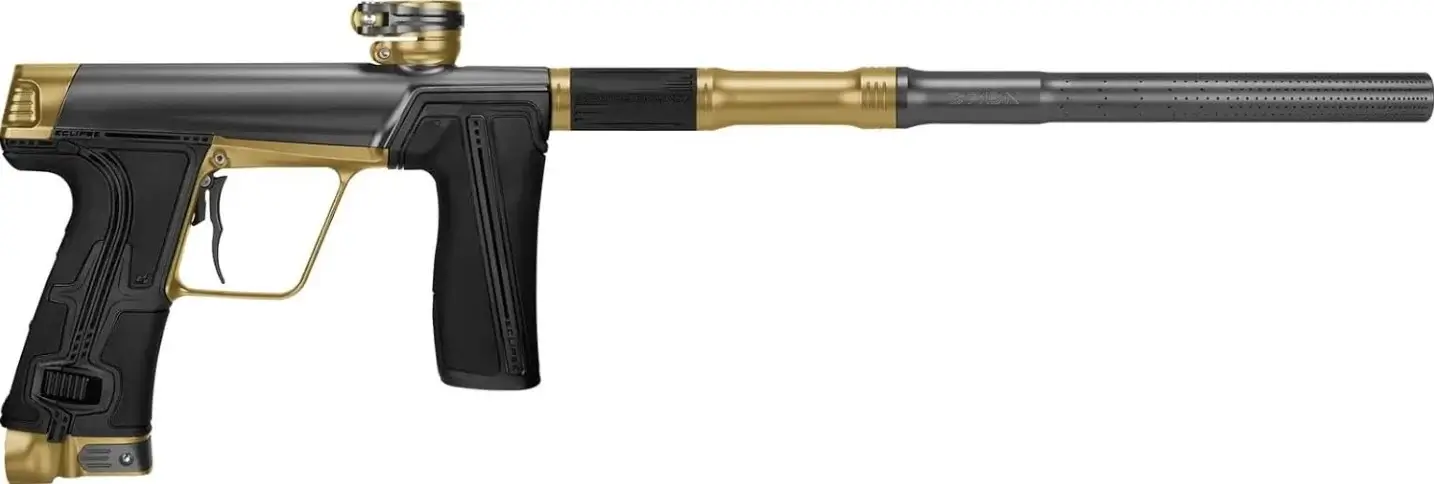
When the priority is eliminating unnecessary variables, the CS3 Pro makes a very strong case.
The marker is designed around Planet Eclipse’s OP Drivetrain and a low operating pressure of 95 to 105 psi. It also carries the MME electronics package, Bluetooth connectivity, a rear-mounted OLED display, and the S63 Pro FL barrel system.
The most interesting part is not any single feature.
It is how the pieces work together.
The CS3 Pro’s concealed eye covers help protect the breech sensors and electronics from paint ingress. Its OLED interface includes an NXL Pro preset, and the marker’s run screen strips away unnecessary information during play.
That is exactly the sort of detail competitive players appreciate.
You do not need a marker screen showing twenty things when all you want to know is whether the marker is ready.
The S63 Pro FL barrel system also includes .681, .685, and .689 inserts. The windowless barrel section is intended to reduce paint and debris entering the system.
What you will notice in the field
The CS3 Pro feels like a marker designed to stay out of your way.
It has a controlled, stable firing character, a highly adjustable trigger, and a low-profile layout that works particularly well for players who spend a lot of time shooting from tight positions.
Who the CS3 Pro is best for
It makes the most sense for:
- Serious tournament players
- Players who value consistency over novelty
- Players who want extensive electronic control
- Anyone who does not want to spend tournament breaks fighting their marker
Who should look elsewhere
A player who simply wants a fun electronic marker for occasional recreational games probably will not use most of what makes the CS3 Pro special.
It is also not the obvious choice if you specifically want the softer, distinctive shot character of a dedicated spool platform such as the GEO R5.
The trade-off
The CS3 Pro is sophisticated.
That is an advantage during competition, but it also means there are more systems and settings to understand than on a basic mechanical marker.
Verdict
The CS3 Pro is my strongest all-around choice for players who want a dependable professional paintball marker without unnecessary drama.
Planet Eclipse GEO R5: The Smooth High-End Spool Platform
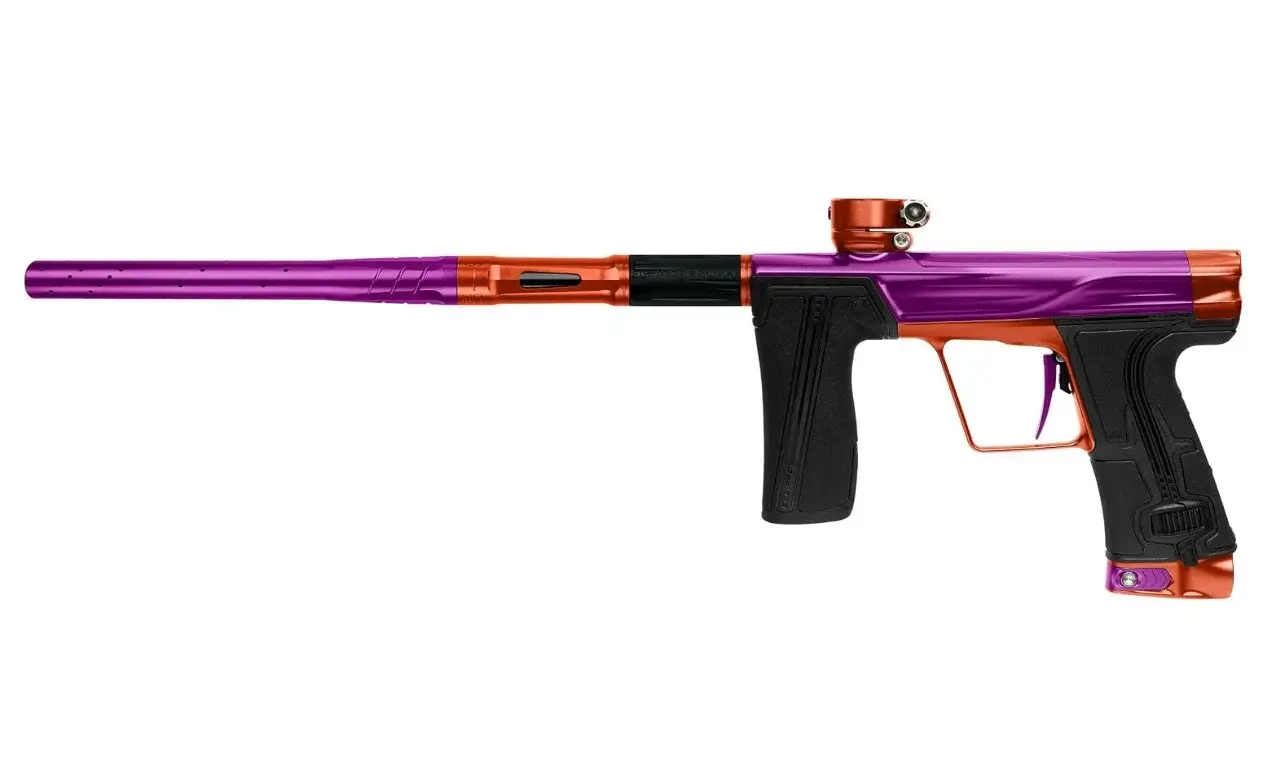
Some players do not want the marker to simply fire efficiently.
They want to feel almost nothing happening between trigger pulls.
That is where the GEO R5 becomes especially interesting.
Planet Eclipse rebuilt the Geo around its new GR drivetrain, adding increased internal volume, breech sensing, low operating pressure, and adjustable bolt acceleration through the SFR system.
The result is a marker aimed squarely at players who enjoy a smooth and stable shooting character.
The GEO R5 also has concealed eye covers, an OLED display, Bluetooth connectivity, and the S63 Pro barrel system with multiple bore options.
What makes it different
The GEO R5 is not simply a slightly different CS3 Pro.
Its appeal comes from the way the drivetrain shapes the shooting experience.
The spool valve design gives the marker a smooth, controlled personality that many experienced players actively seek. Planet Eclipse also allows bolt acceleration adjustment through the SFR, giving the player another way to tune the firing behavior.
That can matter when you already know what kind of shot you like.
A practical tournament scenario
Picture a long point where you spend several minutes shooting lanes and making small positional adjustments.
A marker that stays composed and predictable can feel less tiring than one that constantly demands attention.
That is where the GEO R5 earns its reputation.
Who it suits
The GEO R5 is particularly appealing to:
- Players who prefer a smooth spool valve feel
- Experienced speedball players
- Players sensitive to sound and recoil
- Anyone who values shot character as much as raw performance
The catch
The GEO R5 is a premium platform, and its biggest advantage is also subjective.
If you do not personally like the way a spool valve marker feels, all the engineering in the world will not change your preference.
Verdict
Choose the GEO R5 when smoothness and a refined spool valve feel matter more to you than simply owning the newest flagship.
Field One Force V2: The Championship-Tested Competition Marker
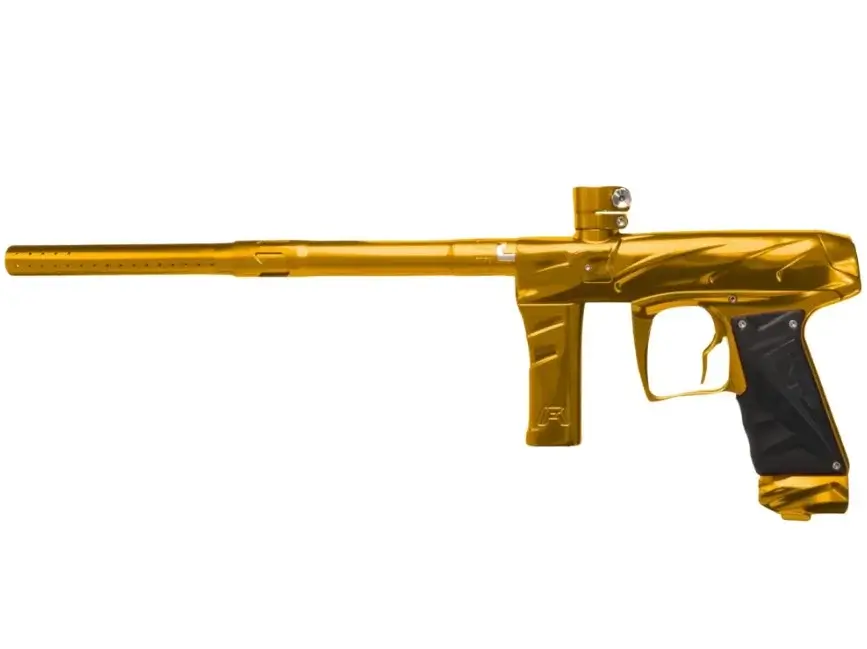
The Force V2 has something marketing brochures cannot manufacture overnight: a long association with successful professional competition.
Field One describes the Force V2 as a refined version of the Force platform used extensively by San Diego Dynasty and cites its success on the NXL Pro field. The company says the V2 is lighter and easier to maintain than its predecessor.
That background gives the marker a different identity from the Planet Eclipse guns.
The Force is built around the Nucleus engine, and fragile paint handling is one of its defining talking points. Field One’s V2 changes include revisions to the bolt, ram, volume chamber, regulator, and other parts of the system.
Why experienced players care about this platform
Tournament paint is not always your friend.
Different batches can behave differently. Older paint can become less forgiving. Temperature can change how everything behaves.
A marker that handles fragile paint well can save you from the classic tournament nightmare: cracking paint inside the marker when you needed the gun to behave.
Field One specifically emphasizes the Force V2’s paint handling and describes it as a platform used by San Diego Dynasty.
Who it makes sense for
The Force V2 works particularly well for:
- Tournament players who value proven platforms
- Players who prioritize paint handling
- Dynasty fans who want the same general platform lineage
- Players who prefer the Force’s shooting personality
One limitation
The Force uses a different design philosophy from the ultra-low-pressure feeling associated with some competing markers.
That is not automatically a disadvantage, but players coming from another platform may need time to adjust to its feel.
Verdict
The Force V2 is the pick for players who place real value on competitive history, paint handling, and a marker platform proven under professional tournament pressure.
DYE MXR: DYE’s Modern Tournament Weapon
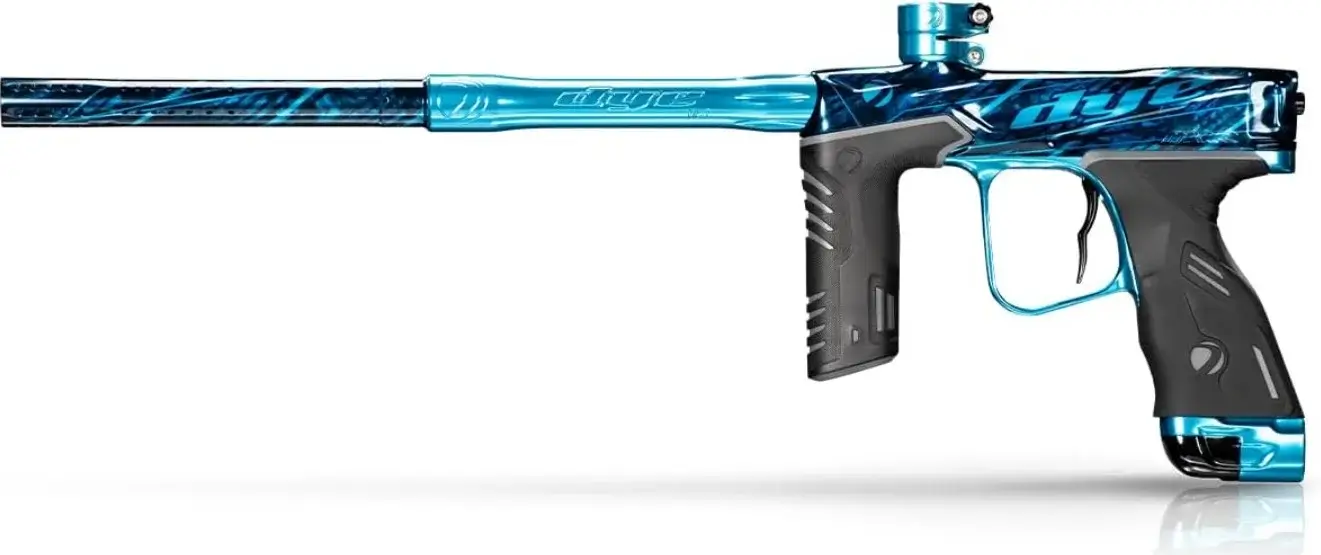
DYE approached the MXR as a new-generation electronic platform rather than simply dusting off an older design.
The marker uses the 3v-MOSair operating system and combines it with an ARC-X bolt, internal pressure sensor, adjustable trigger system, and DYE’s Boomstick UL-i barrel setup.
The barrel system includes multiple bore options, giving players more control over their setup than a basic single-bore barrel.
The MXR also has quick-release grips, a quick-release bolt, and Freewire connectors that remove traditional wire routing between the body and frame.
Where the MXR stands out
Customization is the big story.
DYE gives you meaningful control over trigger feel, barrel selection, and marker setup without turning the gun into a science project.
The internal pressure sensor is another useful touch. Instead of relying entirely on external gauges, the system can provide pressure information directly through the marker’s interface.
For players who enjoy tuning their setup, that is genuinely useful.
A good example of the difference
A player who switches markers frequently may appreciate the MXR’s adjustability.
A player who wants to buy one marker, learn its behavior, and never touch the settings again may not care nearly as much.
That distinction sounds small.
It is not.
Who should buy the MXR?
It makes sense for:
- Players who enjoy customization
- DYE fans
- Competitive players who care about ergonomics
- Players who want modern electronics and a flexible barrel system
The trade-off
The MXR offers a lot of features, but that can encourage unnecessary tinkering.
A marker does not shoot better because you changed twelve settings on a Tuesday night.
Sometimes the best setting is the one you stop touching.
Verdict
The DYE MXR is a strong professional paintball marker for players who want modern electronics, adjustable ergonomics, and a highly configurable shooting platform.
Shocker ERA: A Familiar Tournament Name Refined for Modern Play
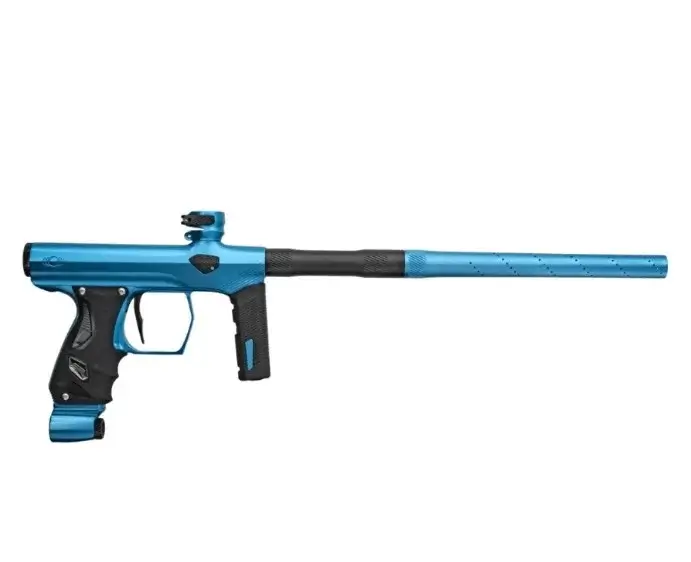
Shocker has been part of competitive paintball culture for a long time, but the ERA is not simply trading on nostalgia.
The marker uses a redesigned bolt assembly aimed at efficiency and reduced ball breakage. Shocker also revised the airflow path, grip and regulator design, eye retention, and body alignment to simplify maintenance.
Its FREAK XL barrel system gives players compatibility with barrel inserts, while the front grip and regulator were redesigned around a wider range of players.
Where it makes sense
The ERA appeals to players who want a balance between familiar Shocker characteristics and modern serviceability.
The company’s focus on airflow and ball handling is especially relevant during fast tournament strings, where inconsistent cycling or brittle paint can quickly ruin a good lane.
What I like about the idea
The ERA does not rely entirely on flashy electronic features to justify its place among high-end tournament markers.
Its mechanical design choices matter.
That includes the effort to simplify maintenance, strengthen the air path, and protect the electronics from common abuse.
The trade-off
If your biggest priority is the huge ecosystem of software features and tuning options found on some newer platforms, the ERA may feel less feature-heavy.
That can also be a benefit.
Fewer distractions can mean fewer things to worry about.
Verdict
The Shocker ERA is worth serious attention from players who want refined paint handling, a mature platform, and straightforward tournament usability.
DLX Luxe TM40: The Premium Marker Experience
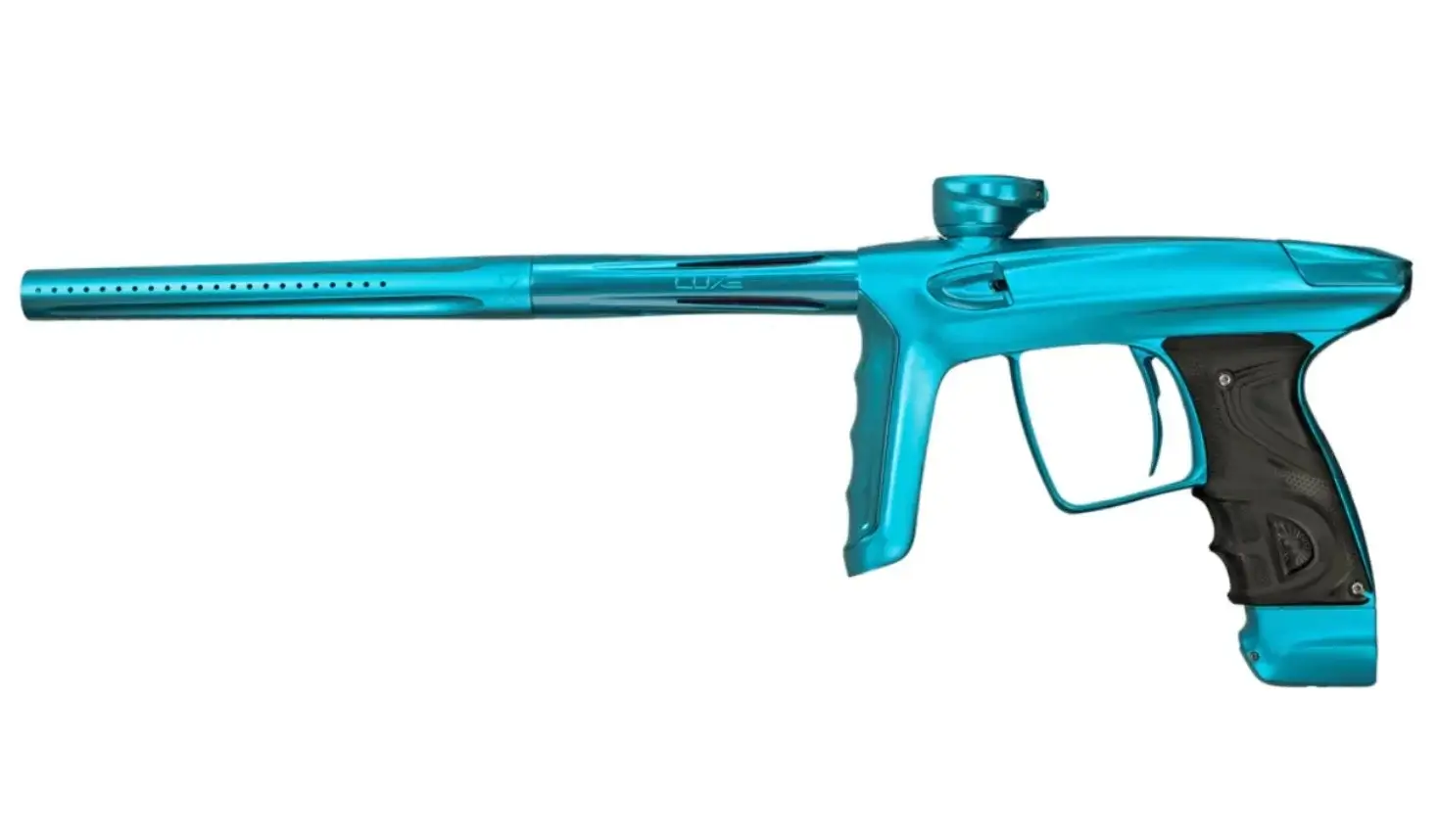
Some paintball markers are bought because they win.
Others are bought because every part of the shooting experience feels expensive.
The Luxe TM40 belongs firmly in the second conversation, although it is far more capable than a status piece.
Its TM40 bolt system is built around a divorced spool design, while the platform adds a Pro-Lock frame, OLED electronics, USB-C software updates, refined ergonomics, and tool-less conversion between electronic and mechanical configurations.
That mechanical capability is the unusual part.
The TM40 can move between electronic and mechanical configurations without the conventional level of tool-heavy conversion associated with many marker platforms.
What you actually feel
The ergonomics are a major part of the experience.
DLX refined the grip frame, foregrip, trigger area, and contact points around current tournament setups, including different tank and loader configurations.
It feels like a marker designed by people who paid close attention to where a player’s hands actually sit.
The TM40 also uses an ICE coating intended to reduce friction and improve durability.
A less obvious advantage
The mechanical conversion makes the TM40 unusually versatile.
A player can own a high-end electronic platform without completely giving up the option of a mechanical configuration.
That is not something every professional player needs, but it is a genuinely distinctive feature.
Who should choose it
The TM40 is especially suited to:
- Experienced tournament players
- Players who place major importance on ergonomics
- Luxe enthusiasts
- Players who want electronic and mechanical versatility
- Buyers who care about premium fit and finish
The limitation
The TM40 is not the most sensible choice simply because it is expensive and sophisticated.
If you only care about winning recreational games, plenty of markers can get the job done without this level of refinement.
Verdict
The Luxe TM40 is for the player who wants tournament performance wrapped in one of the most distinctive ergonomic and mechanical packages available.
Choosing a Tournament Marker Based on Competitive Priorities
Once the individual platforms are separated by personality, the buying decision gets much simpler.
| Priority | Markers to look at first |
| Reliability and tournament confidence | CS3 Pro, Force V2 |
| Smooth shot feel | GEO R5 |
| Configuration and trigger tuning | DYE MXR |
| Airflow and paint handling | Shocker ERA |
| Premium ergonomics and versatility | Luxe TM40 |
The point is not to declare one platform superior.
A player who loves the GEO R5’s smooth spool feel may have little reason to switch to a CS3 Pro simply because someone ranked it higher. Likewise, a player who values the Force V2’s tournament history may not care about the latest electronic extras.
Choose the marker that solves your actual problem on the field.
Why Professional Teams Choose These Marker Platforms
Professional paintball is not quite as simple as saying, “The best marker wins.”
Sponsorship relationships matter.
Team contracts matter. Player preference matters. The relationship between a manufacturer and a professional team can influence which marker ends up in a player’s hands.
That is why team usage should be treated as evidence, not a shopping shortcut.
San Diego Dynasty is closely associated with Field One’s Force platform, and Field One explicitly describes the Force as the team’s marker of choice.
The NXL professional scene has also included teams such as Houston Heat, Los Angeles Infamous, and Red Legion.
The important point is simple:
A professional team using a marker does not automatically make that marker the right one for you.
A professional player may have years of experience with a platform, a sponsor relationship, custom tuning, and a completely different role on the field.
Copying the marker without understanding the reason behind the choice can be an expensive way to learn that lesson.
The Technologies That Actually Matter in Tournament Play
There is no need to become a marker technician before buying a high-end gun.
A few technical areas deserve your attention because they directly affect the playing experience.
Electronic Control
Modern electronic markers use control boards and solenoid systems to manage firing cycles.
For tournament players, the useful features are the ones that improve control or simplify compliance:
- Tournament firing modes
- Lockable settings
- OLED displays
- Trigger adjustment
- Software updates
- Connectivity features on selected platforms
The CS3 Pro and GEO R5, for example, use rear OLED interfaces and support modern Eclipse electronics.
The important question is not how many features are included.
It is whether you will actually use them.
Bolt and Air System Design
The drivetrain largely shapes a marker’s shooting personality.
Spool systems are common in modern high-end tournament markers because of their smooth operating characteristics. Bolt speed, airflow management, operating pressure, and valve control all influence what the player feels.
That is why two markers can perform similarly yet have completely different personalities.
Paint Handling and Barrel Systems
Breech sensors, eye systems, soft-tip bolts, and barrel inserts all have practical jobs.
They help the marker feed and fire paint consistently while giving players more control over barrel setup.
The CS3 Pro and GEO R5 use Eclipse’s S63 system. The DYE MXR uses the Boomstick UL-i system, while the Shocker ERA uses the FREAK XL platform.
For competitive players, the useful question is simple:
Does the system help you keep the marker predictable with the paint you actually use?
Building a Professional Marker Setup
A professional marker is only one piece of competitive equipment.
The loader, HPA system, barrel, paint, and maintenance routine still affect how the complete setup behaves. I cover the wider equipment side separately in the best paintball gear guide.
Tournament Loaders
A fast electronic marker needs a loader that can keep up.
The Virtue Spire family is closely associated with tournament play, while the DYE Rotor remains another well-known competitive loader platform.
The important thing is feeding consistency.
A marker cannot fire a clean stream of paint if the loader cannot deliver the next ball reliably.
That relationship becomes especially important at sustained firing rates.
Barrel and Paint Matching
Buying the most expensive barrel on the market does not automatically make a marker more accurate.
Paint quality and consistency matter enormously.
Insert systems are useful because they allow the bore setup to be changed without replacing the entire barrel. The CS3 Pro and GEO R5 both use Eclipse’s S63 system, while the MXR uses the DYE Boomstick UL-i system with multiple bore sizes.
The goal is a sensible match between the paint and barrel system.
Not a trophy cabinet full of inserts.
Expensive Mistakes to Avoid When Buying a High-End Paintball Gun
Buying Specifications Instead of Shooting Feel
This is the easiest trap to fall into.
A marker can have a spectacular specification sheet and still feel wrong in your hands.
Trigger shape, grip geometry, balance, sound, and shot character are difficult to judge from numbers.
That is why I would test a marker whenever possible.
Ignoring the Maintenance Philosophy
A professional marker still needs care.
The best marker for you may be the one you can comfortably strip, clean, lubricate, and reassemble.
A marker that intimidates you is not really helping.
Assuming Newest Means Best
Newer does not automatically mean better for every player.
Older flagship platforms can remain perfectly competitive when maintained correctly.
Technology moves quickly.
Player preferences do not.
Spending Everything on the Marker
A tournament setup is more than the marker.
A sensible budget needs to account for the loader, HPA tank, barrel setup, paint, batteries, tools, maintenance supplies, and replacement parts.
There is little joy in owning a magnificent marker while using a setup that cannot feed it properly.
Do High-End Tournament Markers Shoot More Consistently?
A premium marker can offer more consistent firing behavior, better paint handling, refined ergonomics, and tighter control over the firing system.
Those advantages can help a skilled player shoot more consistently.
But consistency still depends on paint quality, barrel matching, air supply, weather, shooting technique, and field conditions.
A player using a top-tier marker with poor paint can have a worse day than someone using a simpler marker with good paint and solid fundamentals.
Equipment can remove limitations.
It cannot remove bad habits.
Are Professional Paintball Markers Worth It?
For competitive players, they can be.
A high-end marker is easiest to justify when you play regularly, compete in speedball events, care about consistency, and already understand what you want from your equipment.
For occasional recreational players, the extra adjustment options and maintenance requirements may not add enough value.
Buying professional equipment before you have a feel for your own playing style can also lead to a frustrating purchase.
Final Decision: Which Professional Paintball Marker Makes Sense?
There is no single winner for every player.
| Marker | What stands out | Best match |
| Planet Eclipse CS3 Pro | Consistency, reliability, tournament-focused design | Players who want maximum confidence |
| Planet Eclipse GEO R5 | Smooth spool valve feel | Players who prioritize shot character |
| Field One Force V2 | Competitive history and paint handling | Players who value proven tournament performance |
| DYE MXR | Customization and modern electronics | Players who like tuning and flexibility |
| Shocker ERA | Refined airflow and paint handling | Players who want a mature tournament platform |
| DLX Luxe TM40 | Ergonomics and electronic/mechanical versatility | Players who want a premium experience |
My starting point for most serious buyers would be the CS3 Pro, GEO R5, and Force V2.
They offer three noticeably different answers to the same competitive problem: making the marker predictable when everything else is moving quickly.
FAQs About Professional Paintball Markers
What is the best professional paintball marker right now?
There is no universal winner, but the Planet Eclipse CS3 Pro stands out as an especially strong all-around choice for competitive players who prioritize consistency, tournament functionality, and reliability.
The GEO R5 may be the better fit for players who specifically prefer a smooth spool valve shooting character.
What paintball markers do NXL players use?
NXL competition includes professional teams using different marker platforms, often influenced by sponsorships, individual player preferences, and team relationships.
San Diego Dynasty has a strong association with the Field One Force platform, while other professional players use major tournament platforms from manufacturers such as Planet Eclipse, DYE, Shocker, and Luxe.
Do high-end tournament markers shoot more consistently?
They can.
Premium platforms generally give competitive players better control over firing behavior, paint handling, and setup.
That can make it easier to produce repeatable shots, but equipment alone does not determine accuracy or consistency.
Is a professional paintball marker worth the money?
It can be worthwhile for serious tournament players who play frequently.
For occasional recreational players, the extra performance and adjustment options may not justify the added complexity.
What is the difference between a tournament marker and a regular paintball gun?
Tournament markers are designed around fast, repeatable operation.
They commonly include electronic firing systems, tournament locking, better trigger adjustment, refined ergonomics, advanced air systems, and stronger attention to maintenance and paint handling.
A recreational marker may be simpler by design, which is sometimes exactly what the player needs.
Final Thoughts
The best professional paintball marker is not the one with the longest feature list.
It is the one that disappears into the background when the game starts.
You should be thinking about your lane, your teammates, the next move, and the clock. Your marker should simply do its job.
That is the real difference between owning a high-end gun and owning a professional paintball setup you can trust.
At Paintball Renegade, I would always judge these markers through that lens: how they shoot, how they behave when conditions get rough, how easy they are to maintain, and whether their strengths actually match the player buying them.
The fastest gun on paper is not always the fastest gun for you.
Sometimes the best upgrade is simply finding the marker that feels right in your hands.