
Modern paintball markers have become lighter, simpler, and easier to live with. Autocockers somehow ignored that memo.
They still click, cycle, hiss, and demand a little mechanical sympathy. Yet players keep hunting for them. If you want an Autococker paintball gun in 2026, the challenge is not finding choices. It is figuring out which choices are actually worth owning.
At Paintball Renegade, I narrowed that messy market to four genuine Autocockers with very different personalities.
What Is an Autococker Paintball Gun, Really?
An Autococker is not simply an old mechanical paintball marker with fancy milling. It is a closed-bolt, semi-automatic paintball marker built around a mechanically controlled pneumatic recocking system.
The design grew from Bud Orr’s Sniper pump platform. Worr Game Products, better known as WGP, introduced the Autococker publicly in 1991. The clever part sits around the front of a traditional Autococker.
A classic setup uses three important pneumatic components:
- Low-pressure regulator, or LPR: Supplies controlled air to the cocking system.
- 3-way valve: Directs that air depending on trigger position.
- Ram: Physically drives the cycling mechanism backward and forward.
Inside the marker, the bolt, hammer, sear, valve, cocking rod, pump rod, and trigger system join the dance. It sounds complicated because there are many parts.
The basic idea is actually wonderfully mechanical. Pulling the trigger first fires the marker. Continued trigger movement operates the 3-way and sends air to the ram. The marker then recocks and loads another paintball.
Releasing the trigger reverses the pneumatic action and closes the bolt again. Empire’s Resurrection manual describes this same sequence essentially. Its first trigger stage fires the marker, while later travel activates the 3-way and ram.
That is the “auto” in Autococker. It automatically performs the pumping motion that a Sniper owner would otherwise perform by hand.
A Barrel Thread Does Not Make Something an Autococker
This distinction saves buyers from a surprising amount of confusion. Autococker barrel threading became extremely popular across paintball. Many completely unrelated markers now use the same barrel thread pattern.
That does not turn them into Autocockers. Likewise, a paintball Autococker pump usually uses the same underlying body architecture. However, its pneumatic autococking system has been removed or replaced by a pump kit.
That makes pump conversions part of the family tree, but not the focus here. This guide compares genuine semi-automatic Autococker platforms.
Four Autocockers, Four Very Different Reasons to Own One
Finding the best Autococker paintball gun depends heavily on what kind of owner you are. Some buyers want a shooter. Others want history, tinkering, premium machining, or a marker worth preserving.
Here is the fast version.
Model | Best For | Character | Typical Buying Route | Ownership Learning Curve |
Best overall entry | Modernized mechanical Autococker | Remaining stock, NOS, used | Moderate | |
Premium enthusiasts | Modern high-end Autococker | Specialist market | Moderate | |
Classic WGP enthusiasts | Collectible and playable | Mostly used | Moderate to high | |
Classic value | Traditional working Autococker | Mostly used | Moderate to high |
None is automatically “better” everywhere. Think of them as four different doors into Autococker ownership.
My Autococker Paintball Gun Picks
These four models solve different problems.
That matters because buying an Autococker like a normal current-production marker can end badly. Condition, previous modifications, parts compatibility, and maintenance history often matter more than the logo.
1. Empire Resurrection Autococker
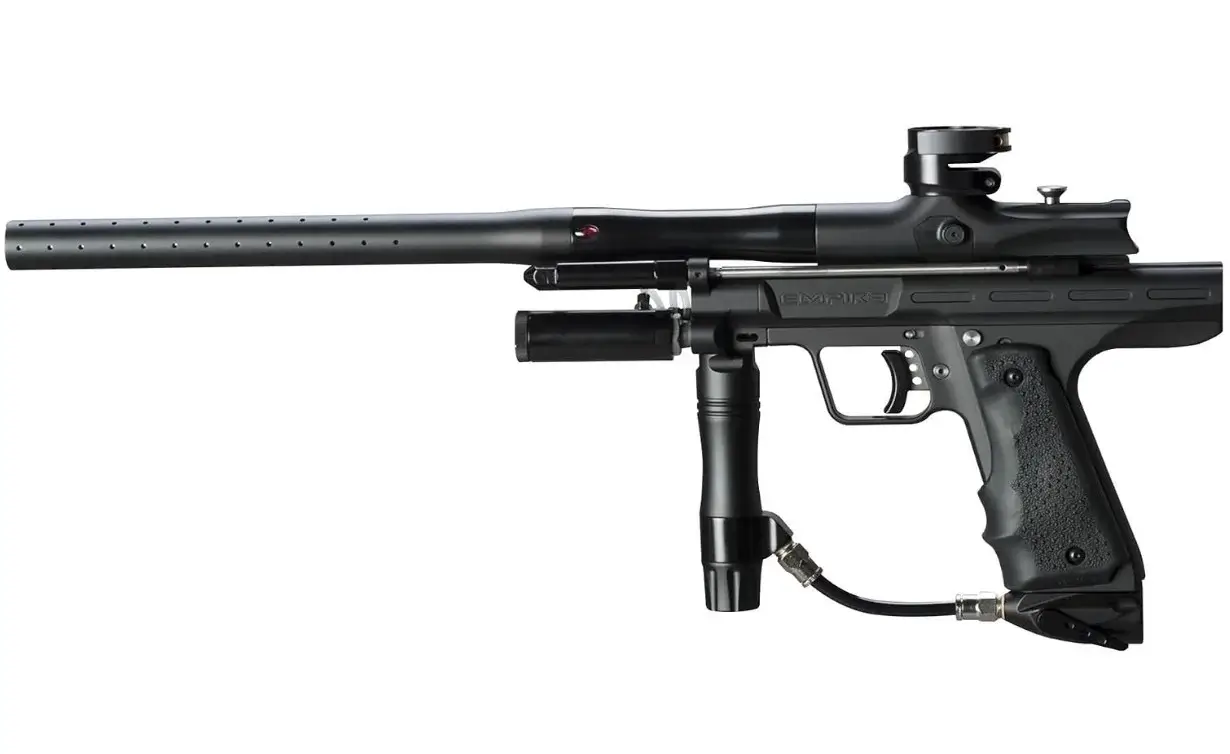
A player returning to paintball after fifteen years may want an Autococker without inheriting fifteen years of someone else’s experiments. That is where the Empire Resurrection makes sense.
It keeps the mechanical closed-bolt character but wraps it in a more modern package. Empire also built practical conveniences into the marker.
The Resurrection includes a clamping feedneck, on/off ASA, adjustable LPR, slide trigger frame, and multi-back barrel setup on standard configurations.
Its architecture is also more compact than a traditional full-body Cocker. What It Feels Like on the Field
The Resurrection still makes you participate in the shot. The trigger is not an electronic mouse click. You feel the mechanical sequence, especially when firing deliberately.
That tactile quality is half the appeal. At the same time, you avoid some classic Autococker annoyances. The compact cycling layout removes the traditional moving back block found on older full-body designs.
Players commonly praise the Resurrection as an approachable mechanical Cocker. Enthusiast reports also show that timing and worn components can still create problems after extensive use.
So “modern Autococker” does not mean “immune to Autococker problems.”
Who It Makes Sense For
I would put the Resurrection first for:
- Someone buying a first Autococker
- A returning player who remembers WGP markers fondly
- A mechanical player wanting something more characterful
- Someone who wants to play rather than immediately restore
It makes less sense for a collector chasing classic WGP originality. A Resurrection also will not satisfy someone who specifically wants the moving back block and traditional full-body experience. That old mechanical theater is missing.
The Trade-Off
The Resurrection occupies an awkward place today. It feels modern enough to attract newer buyers, but it is no longer something I would treat like ordinary current-production inventory.
Listings appear, disappear, and shift between remaining stock and secondary-market examples. A marker that has spent years untouched may also need fresh O-rings despite looking almost new.
Rubber does not care how pretty the box is.
Verdict: The Resurrection is the easiest recommendation for someone wanting an Autococker to actually play with. It keeps the personality without demanding maximum vintage patience.
2. Inception Designs RETRO FLE Autococker
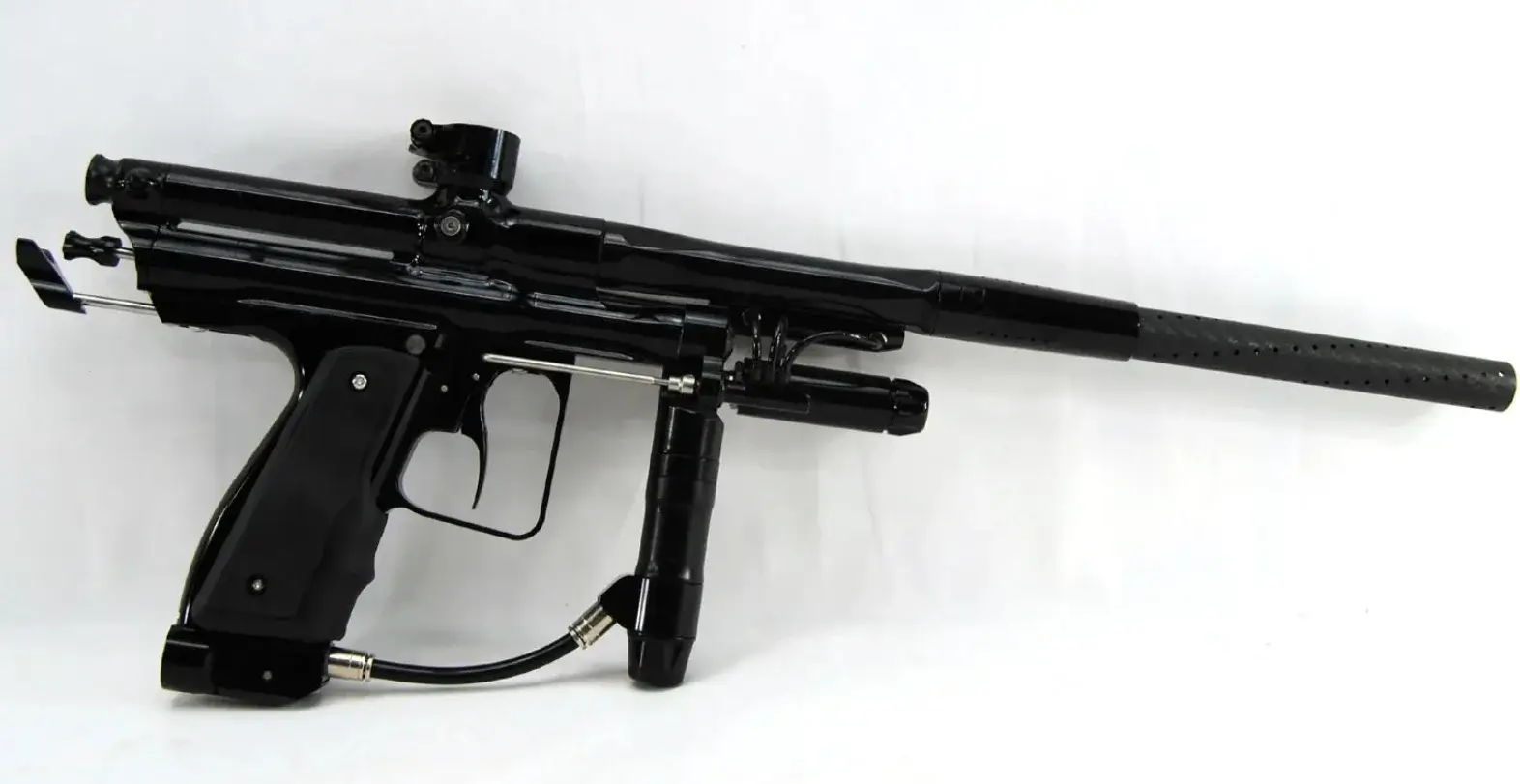
Some players are not trying to recreate 2004. They want the Autococker concept with modern machining, modern pneumatics, and fewer excuses.
That buyer eventually finds the Inception Designs RETRO FLE. This is not simply an old WGP body wearing new accessories. It represents a modern interpretation of the Autococker platform.
Current RETRO FLE configurations use Inception components including the UFC 3-way, GTR ram, LPR, modern bolt systems, and premium trigger-frame choices. Complete builds have also included Stella barrel systems.
Where the Extra Refinement Shows
A properly configured RETRO FLE feels deliberate. The pneumatics are designed as a system rather than a random collection of parts accumulated through three previous owners. That matters.
A vintage Autococker can contain a WGP body, aftermarket ram, different LPR, replacement 3-way, unknown springs, modified frame, and somebody’s “custom tuning.”
Sometimes that combination is brilliant. Sometimes it resembles a group project where nobody attended the same class.
The RETRO FLE reduces that uncertainty. Inception also continues supporting Autococker-compatible pneumatics, internals, body parts, and pump components. That active parts ecosystem matters for long-term ownership.
The Player Who Will Appreciate It
This marker makes the most sense after you already understand why Autocockers are interesting. You may notice:
- A refined mechanical trigger feel
- Cleaner component integration
- Strong adjustment potential
- Modern ergonomics around classic operation
- Easier access to supported replacement components
Someone buying their first mechanical marker may not appreciate those differences enough. That is the uncomfortable truth.
Premium machining cannot teach trigger technique. Expensive pneumatics cannot stop an owner from adjusting screws randomly.
Who Should Skip It
Skip the RETRO FLE if you simply want the cheapest route into an Autococker. Also skip it if nostalgia is your priority.
A classic Orracle or Prostock carries more original-era WGP character. The RETRO FLE is closer to a beautifully restored classic car with modern suspension underneath. Purists may prefer the rattles.
Verdict: Choose the RETRO FLE when you already like Autocockers and want a refined modern example. Beginners can enjoy it, but enthusiasts will understand it better.
3. WGP Orracle Autococker: Buy With Your Heart, Inspect With Your Head

Then there is the Orracle. This is where rational shopping starts losing arguments to anodizing.
Classic WGP Orracles remain desirable because they combine recognizable milling, higher-end WGP heritage, and strong collector appeal.
But buying one today is less about choosing “an Orracle.” It is about choosing that particular Orracle sitting in front of you.
Two Orracles Can Be Completely Different Markers
Years of modifications have changed many surviving examples. One may retain mostly original mechanical components.
Another may have different pneumatics, regulator, bolt, feedneck, trigger frame, valve, or electronic conversion.
A current listing from Bearded Works describes an Orracle assembled from used parts, fitted with a modified feedneck and replacement regulator, then fully rebuilt.
Another specialist listing shows an Orracle using Eclipse electronic hardware rather than its original mechanical configuration.
Neither situation automatically makes the marker bad. It changes what you are buying.
Originality Matters Differently Here
With a player-grade Prostock, upgraded components can be a practical bonus. With an Orracle, originality may carry collector value.
Look closely at:
- Original body condition
- Factory or aftermarket anodizing
- Mechanical or electronic frame
- Pneumatics
- Bolt and internals
- Regulator
- Feedneck modifications
- Eye drilling on converted examples
- Missing factory components
An undrilled mechanical example can attract a completely different buyer from a heavily modified electronic build. That difference is not about performance alone.
Who Should Actually Buy One
The Orracle fits someone who gets excited by WGP history. You may want to play with it, display it, restore it, or do all three.
It is less suitable for someone who hates researching old parts. If your ideal marker ownership experience involves opening a box Friday and playing Saturday, inspect carefully before choosing an Orracle.
A professionally serviced example changes that equation considerably.
The Orracle Trap
Beautiful anodizing has probably caused more questionable Autococker purchases than timing ever did. That is only half a joke.
Do not buy one because the body photographs well. Ask what sits inside it.
Verdict: The Orracle is my classic premium pick. Buy it for authentic WGP character, but judge the individual build more carefully than the model badge.
4. WGP 2K4 Prostock Autococker: Classic Cocker Without the Trophy Case
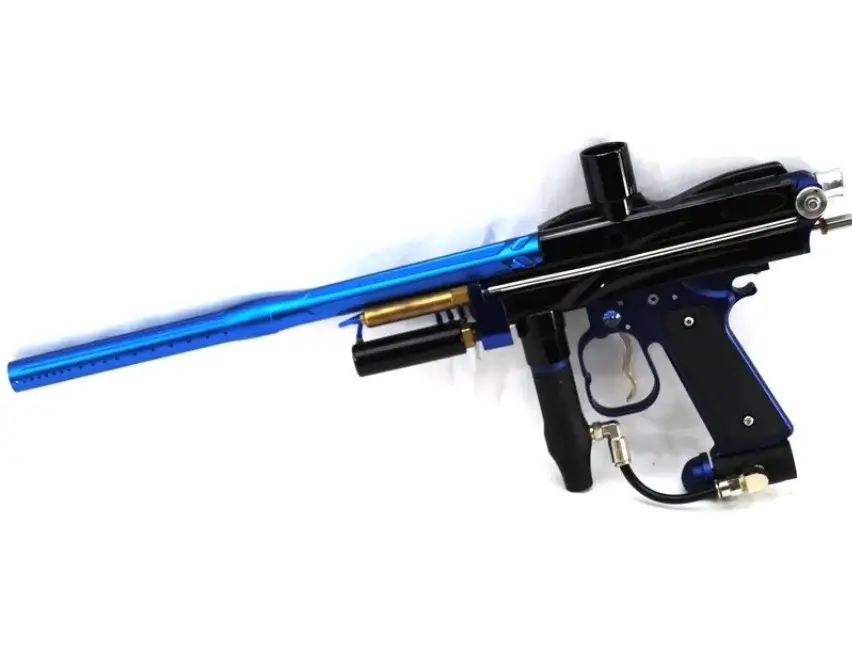
Not everyone wants to babysit a collectible. Sometimes you want an old-school WGP Autococker that can get dirty, get serviced, and return to the field.
The 2K4 Prostock fits that mindset beautifully. Its appeal comes from being recognizably traditional.
You get the full-body layout, classic front pneumatics, mechanical cycling, back block movement, and broad upgrade potential associated with the old Autococker experience.
Why It Makes Such a Good Player’s Cocker
The Prostock gives you room to learn. That may mean understanding timing, replacing seals, changing a worn regulator seat, or figuring out why someone installed a particular bolt.
Surviving examples often contain aftermarket parts. Current used listings show Prostock markers with replacement barrels, hinge frames, aftermarket bolts, ASAs, and other modifications.
That variety makes shopping interesting. It also makes photographs insufficient. A shiny body cannot tell you whether the ram leaks.
A Realistic Use Case
Imagine finding a 2K4 that looks scratched but has been tested, timed, and serviced. Beside it sits a prettier marker that has not been aired up in ten years.
For a field gun, I take the ugly working one surprisingly often. Paintball eventually adds scratches anyway.
Who Will Enjoy It Most
A Prostock suits players who want to learn how their marker works. It also makes sense for someone who enjoys mechanical equipment beyond paintball.
If adjusting a carburetor sounds satisfying rather than horrifying, you probably understand the appeal. Someone wanting complete plug-and-play simplicity should look elsewhere.
A modern mechanical marker asks fewer questions.
The Trade-Off
The same upgrade potential that makes a Prostock fun can make used examples unpredictable. Mixed components are normal.
Some combinations are thoughtful. Others were assembled because those parts happened to be available.
Verdict: The 2K4 Prostock is the classic-value choice for a player who wants to shoot, tune, and understand an Autococker rather than preserve one untouched.
Resurrection vs. RETRO FLE vs. Orracle vs. 2K4 Prostock
Four good Autocockers can still serve four very different owners. The deciding factors become clearer when placed together.
Factor | Resurrection | RETRO FLE | Orracle | 2K4 Prostock |
Overall feel | Modernized mechanical | Premium modern mechanical | Classic premium WGP | Traditional WGP |
Body style | Compact block design | Full-length modern Cocker | Classic full-body | Classic full-body |
Beginner friendliness | Highest here | Good, but enthusiast-focused | Depends heavily on condition | Depends heavily on condition |
Tuning involvement | Moderate | Moderate | Moderate to high | Moderate to high |
Parts ecosystem | Good | Strong modern support | Mixed classic and aftermarket | Broad aftermarket history |
Collector appeal | Moderate | Modern enthusiast appeal | High | Moderate |
Best role | Shooter | Premium shooter | Collector and shooter | Working classic |
My quick decisions are simple. Buy the Resurrection if you want the least intimidating entry. Buy the RETRO FLE if modern Autococker engineering matters most.
Buy the Orracle if WGP heritage makes your brain stop behaving rationally. Buy the 2K4 Prostock if you want a classic marker you are willing to wrench on.
The Closed-Bolt Accuracy Myth Needs to Die
Autocockers have carried one claim for decades. Closed-bolt operation supposedly makes them inherently more accurate. It is a wonderful story. It also does not survive controlled testing very well.
Closed-bolt means the paintball sits chambered with the bolt forward before firing. Open-bolt systems hold the bolt rearward before the firing cycle begins.
That difference changes how a marker operates. It does not create magic ballistics.
WARPIG Ballistic Labs tested open-bolt and closed-bolt operation under controlled conditions. It found effectively equivalent group sizes.
Its conclusion was refreshingly direct: “The great ‘inherent accuracy’ of closed-bolt markers over open-bolt markers is a myth.”
So why do many Autocockers feel wonderfully consistent?
A good one can have:
- Stable velocity
- Good paint
- Proper barrel fit
- Smooth mechanical operation
- Careful setup
- A player taking deliberate shots
Those things matter. The bolt waiting forward does not bend physics in your favor. Paint quality remains especially important. Poor paint can make an expensive marker shoot as if it owes you money.
Why Autococker Paintball Gun Price Is So Hard to Generalize
Searching Autococker paintball gun price can produce wildly different results. That does not mean the market has lost its mind completely. You are often comparing completely different categories.
Modern Premium Builds
Modern Autococker platforms use newly manufactured components, current machining, and specialist assembly. The RETRO FLE belongs here. The buyer values modern support and component integration more than factory WGP originality.
Remaining Stock and New Old Stock
Discontinued markers occasionally remain in retailer inventories or private collections. The Resurrection often appears in this space. Storage condition matters. A marker can remain unfired while its O-rings quietly age.
Used Player Guns
This category contains many Prostocks and modified WGP markers. Cosmetic wear matters less than mechanical condition. A serviced player gun can be a better purchase than an untouched shelf queen.
Collector-Grade Classics
Models such as the Orracle become more complicated. Originality, milling, anodizing, condition, frame configuration, and rare components can influence desirability. A collector and a weekend player may value the same marker differently.
That is why I avoid quoting one “normal” Autococker paintball gun price. The useful question is not, “What does an Autococker cost?” Ask, “What exactly is this Autococker?”
Buying a Used Autococker? Make the Seller Prove These Things First
A used Autococker paintball gun for sale can look spectacular in twelve carefully chosen photographs. Unfortunately, photographs cannot hear leaks.
Before money changes hands, I want evidence that the marker behaves properly.
Does It Hold Air?
Ask the seller to air it up. Listen for leakage around:
- LPR
- 3-way
- Ram
- Inline regulator
- Valve area
- Pneumatic hoses
Tiny leaks may only require seals. They still tell you the marker probably needs attention.
Old O-rings are common on vintage equipment. WGP currently sells replacement Autococker O-rings for several key assemblies, confirming that service parts remain available.
Does It Complete the Full Trigger Cycle?
This matters more than hearing one shot. The marker should fire, recock, load, close, and return consistently. Watch several consecutive cycles. An Autococker that fires once does not automatically qualify as healthy.
Ask for a Current Shooting Video
A seller saying “it worked last time” is not the same as proof. Ideally, request footage showing:
- The marker airing up
- Several consecutive shots
- Visible cycling
- No obvious leaks
- Chronograph results when practical
A recent video matters. A clip filmed before your current tank was manufactured is less comforting.
Ask What Is Actually Original
Older Autococker paintball guns often became rolling upgrade catalogs. Ask specifically about:
- Pneumatics
- HPR
- Trigger frame
- Bolt
- Valve
- Springs
- Feedneck
- ASA
- Barrel
- Electronic conversions
Aftermarket parts are not automatically inferior. Unknown parts are simply harder to evaluate.
Ask When It Was Last Serviced
A rebuild can change the buying decision dramatically. For example, current specialist used listings sometimes document replaced O-rings, recent assembly, service dates, and function testing.
That information is valuable. “Looks clean” is not maintenance history.
Short-Stroking: The Autococker Mistake New Owners Discover Quickly
A mechanical Autococker trigger does more work than a normal trigger switch. That is why half-hearted trigger pulls can cause very wholehearted problems.
Short-stroking happens when the player does not complete the full mechanical trigger cycle. The sear and pneumatic system operate at different points within that movement.
An incomplete pull or release can interrupt recocking. Possible results include:
- Incomplete bolt movement
- Failure to cock
- Feeding problems
- Dry firing
- Chopped paint
Historical Autococker documentation describes this same relationship between trigger travel, the 3-way, and recocking.
What It Feels Like
New owners sometimes try firing a mechanical Cocker like a modern electronic marker. Rapid little finger taps feel natural. The Autococker may disagree.
A deliberate full pull and release usually produces a much happier cycle. Once the marker is properly timed and your trigger technique becomes familiar, operation feels natural.
Do not immediately shorten every adjustment because the screws exist. Autococker ownership has an ancient rule:
If it shoots beautifully, resist the urge to improve it at midnight.
Will Modern Gear Fit an Old Autococker?
Vintage does not mean you need a complete vintage loadout. Most owners can combine an older paintball Autococker with modern field equipment. Compatibility simply deserves checking first.
HPA Tanks
Modern compressed air is the practical choice for most Autococker owners. Empire specifically recommends compressed air for the Resurrection. Older WGP systems historically operated with CO2 as well.
That does not mean CO2 is the easiest modern choice. HPA gives cleaner pressure behavior and avoids liquid CO2 concerns that affected older setups. Always use a properly rated tank and regulator.
Chronograph the marker according to your field’s velocity rules before play.
Hoppers and Loaders
Modern loaders can work perfectly well. Feedneck compatibility is the issue. Older Autocockers may use feedneck arrangements that predate today’s convenient clamping designs.
Do not force a loader into an incompatible neck. Adapters or updated feednecks may solve the problem.
Barrels
Autococker barrel threading became one of paintball’s most widespread standards. That gives owners an enormous barrel ecosystem. Remember one practical closed-bolt quirk.
A paintball sitting beyond the detent can roll forward when the barrel bore is too large. Choose an appropriate bore rather than chasing tiny sizes purely for accuracy mythology.
Replacement Parts
Parts availability is better than many newcomers expect. Current Inception catalogs include:
- LPR components
- Rams
- 3-way valves
- Bolts
- Hammers
- Valves
- Trigger components
- Pump kits
Worr Game Products also currently lists Autococker internal parts, frames, O-rings, valves, and body components.
That does not mean every vintage component is interchangeable. Model-specific pieces still exist. Research before ordering.
Autococker Maintenance Is Mostly About Knowing What Not to Touch
Autocockers have a reputation for requiring endless maintenance. That reputation deserves context. Routine ownership is not necessarily difficult.
Uninformed adjustment is. A properly functioning marker normally needs sensible care:
- Clean paint from the breech and barrel
- Inspect pneumatic hoses
- Watch for O-ring leaks
- Lubricate according to component requirements
- Keep threads clean
- Check velocity before play
- Store it safely without unnecessary pressure
The trouble usually starts when someone adjusts the LPR, HPR, timing rod, hammer lug, and trigger geometry simultaneously. Now there are five variables.
Nobody remembers where they started. That is not maintenance. That is mechanical gambling.
If a used marker needs extensive timing or lower-tube work, professional service may be the smarter path.
Modern shops and current aftermarket support keep that option alive.
Three Expensive Ways to Buy the Wrong Autococker
The used market rewards curiosity. It punishes assumptions. These three mistakes cause more trouble than choosing the “wrong” model.
1. Buying the Prettiest Marker Without Asking What Is Inside
Autococker bodies can look incredible. Custom anodizing makes rational thought surprisingly fragile. Still ask about the ram, 3-way, LPR, HPR, frame, bolt, valve, springs, and previous work. A beautiful body containing a mystery build is still a mystery build.
2. Paying Collector Attention to a Player-Grade Build
A heavily modified marker can shoot beautifully. That does not automatically make it collectible. Likewise, an original classic may deserve preservation even if newer components could improve convenience.
Decide what you want before shopping. A shooter and a collectible solve different problems.
3. Upgrading a Marker Before Learning It
The Autococker aftermarket is dangerously entertaining. Inception currently offers enough compatible components to turn browsing into an afternoon project. Resist initially.
Play with the marker first. Learn its trigger, cycling, consistency, and quirks. A well-timed stock component does not become bad because a shiny replacement exists.
So, Is an Autococker Still Worth Buying in 2026?
Yes, for the right person. An Autococker offers something many modern markers deliberately removed: mechanical involvement. You feel more of the firing cycle.
You can understand what individual components actually do. There is satisfaction in hearing a properly timed marker cycle cleanly after everything has settled into place.
It is paintball machinery with personality.
An Autococker Makes Sense If You Want
- Mechanical character
- Tuning potential
- Classic WGP history
- Customization
- A marker that rewards mechanical curiosity
- Something unusual at the field
Choose Something Else If You Want
- Maximum plug-and-play simplicity
- Minimal mechanical knowledge
- Current mass-market factory support
- Modern electronic firing performance
- A marker you never intend to learn
Frequently Asked Questions
A few Autococker questions sit outside the main buying decision. These deserve short answers without turning this child post into a complete WGP encyclopedia.
Who Originally Made the Autococker Paintball Gun?
Bud Orr and Worr Game Products developed the Autococker from WGP’s earlier Sniper pump platform. Paintball History documents Bud Orr developing the Sniper during the late 1980s. WGP publicly introduced the Autococker in March 1991.
WGP later produced many related models. Those included the Minicocker, Prostock, Superstock, Orracle, Black Magic, Karnivor, Trilogy, and Autococker SR.
Are New Autococker Paintball Guns Still Being Made?
The answer needs nuance. The original mass-market WGP Autococker era ended years ago. However, the Autococker platform itself is very much alive.
Inception Designs currently manufactures Autococker-compatible bodies, internals, pneumatics, frames, and build components. It even maintains guidance for building modern Autococker configurations.
Worr Game Products also currently sells new Autococker parts and body components. Complete modern markers appear through specialist channels rather than normal high-volume retail.
So Autocockers are not dead. They simply became enthusiast equipment.
Can You Convert an Autococker Into a Pump?
Yes. The Autococker grew from the Sniper pump architecture, which makes the relationship unusually close. A pump conversion removes the need for pneumatic autococking and replaces that action with manual pumping.
Current manufacturers still sell Autococker-compatible pump kits. Someone specifically searching for an Autococker pump paintball gun for sale should compare dedicated pump setups separately. Pump play changes the entire experience.
Are Electronic Autocockers the Same as Mechanical Autocockers?
They share the same broader Autococker platform, but trigger control differs. Mechanical Autocockers physically coordinate firing and pneumatic timing through trigger movement.
Electronic conversions use electronics and solenoids to control those actions. Classic E-Cockers and E-Blade conversions can therefore shoot very differently from mechanical versions.
For this guide, I favor mechanical Autocockers because they preserve the experience most buyers associate with the platform.
Final Takeaway
An Autococker is an odd recommendation in 2026. That is precisely why it remains interesting.
Modern markers can be easier, lighter, faster, and less demanding. An Autococker answers with moving parts, pneumatic timing, a distinctive trigger, and thirty-plus years of enthusiast obsession.
For most first-time buyers, I would start with the Empire Resurrection. For premium modern engineering, the RETRO FLE stands apart.
For WGP heritage, choose the Orracle. For a traditional marker you can learn and play hard, the 2K4 Prostock remains wonderfully difficult to ignore.
Whatever you buy, condition beats hype. Ask questions. Request a shooting video. Verify the components. Then leave the timing screws alone until you understand what they do.
Your future Saturday morning will thank you.
Resources and Further Reading
Empire Resurrection Owner’s Manual: Read the Resurrection Autococker manual
Closed-Bolt Accuracy Testing: WARPIG Ballistic Labs closed-bolt test
Current Autococker Parts: Inception Designs Autococker parts catalog
Current WGP Components: Worr Game Products catalog