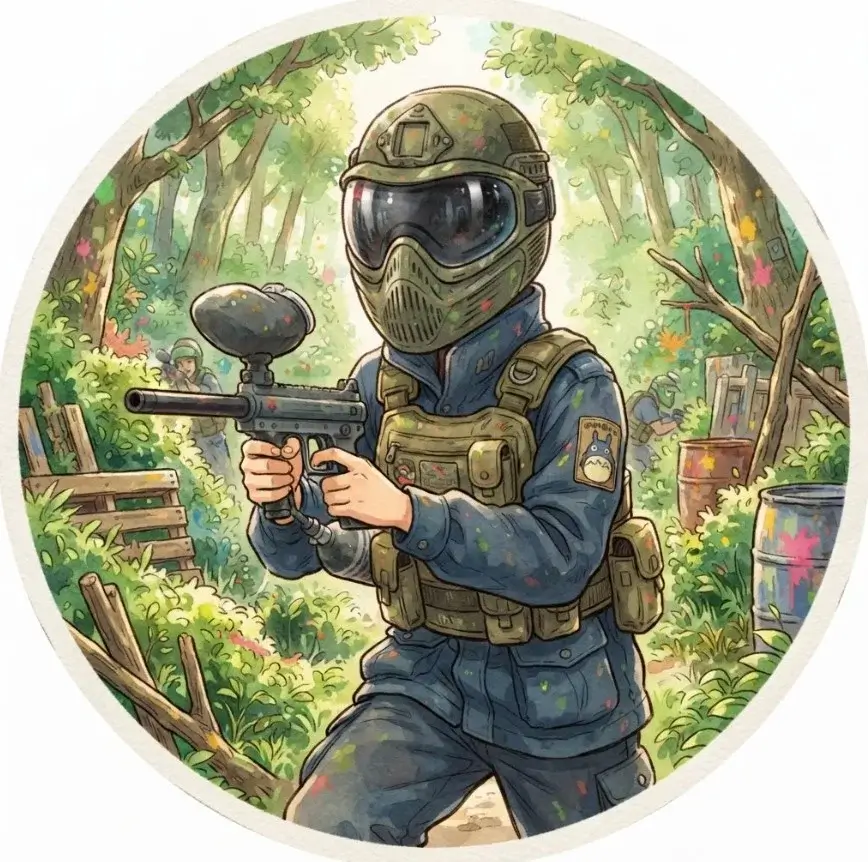
Paintball can look complicated from the outside because the game has its own equipment, field language, rules, and competitive formats. The basic idea is much simpler. Paintball is a recreational and competitive game in which players use paintball markers and paintballs to complete an objective while following defined field and safety rules. Organized paintball is also treated as a sport, with standardized equipment requirements and formal competition formats.
At Paintball Renegade, I think the easiest way to understand paintball is to separate the game itself from all the equipment and tactics surrounding it. This guide focuses on what paintball is, how a normal game works, and what you can expect during a typical session.
What Is Paintball?
A simple paintball definition is this: paintball is a game or sport in which players compete on a defined playing field using paintball markers and breakable paintballs. Players usually work toward an objective, while hits can remove players from a round according to the rules being used.
Paintballing simply means participating in or playing paintball.
The word paintball can also mean two different things:
- Paintball as an activity: the recreational game or competitive sport.
- A paintball: the breakable projectile used during the game.
Paintball can be played casually or through organized competition. ASTM publishes standards specifically for paintball markers, protective equipment, game-site operation, projectiles, and player safety briefings, while the National Xball League currently operates structured competitive paintball formats.
So, what is a paintball game all about?
At its simplest, the relationship looks like this:
Players → field → objective → hits and eliminations → end of round
Equipment makes that possible, but the equipment is not the game itself.
How Does Paintball Work?
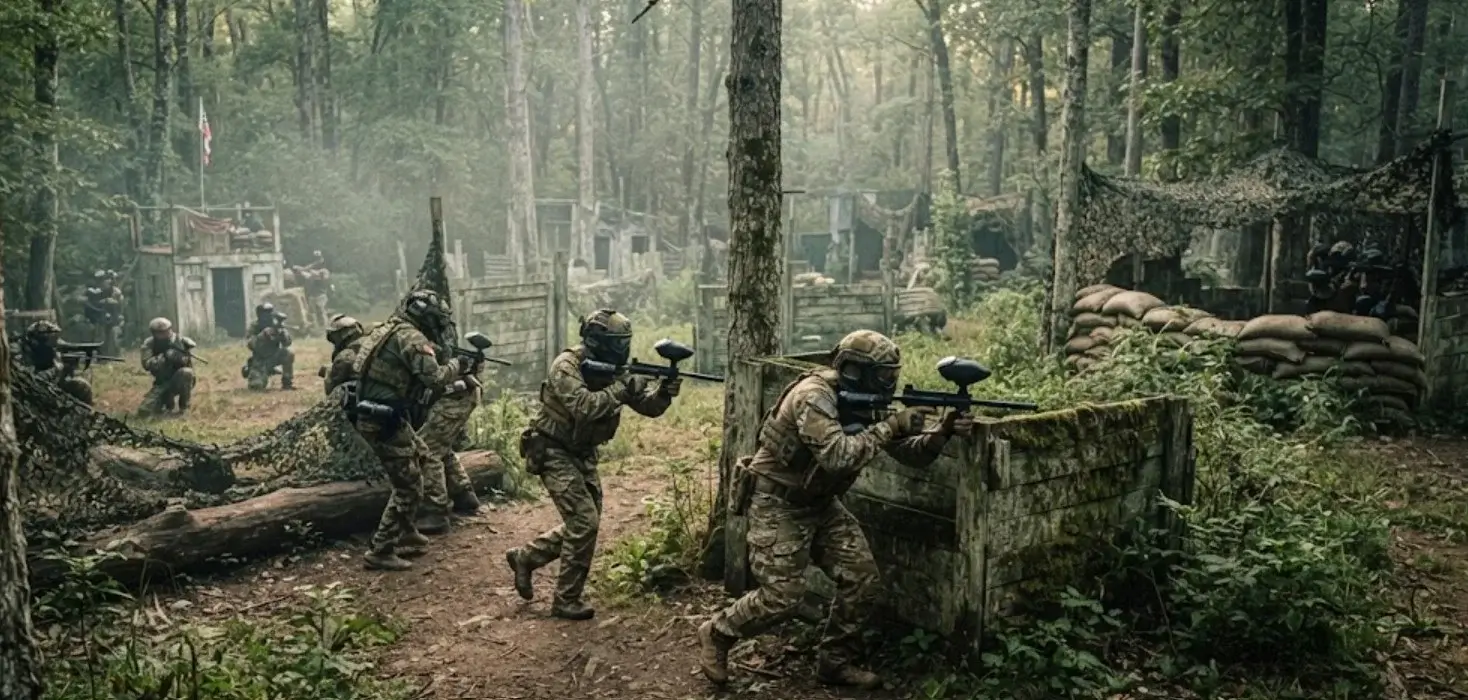
A paintball game follows a basic structure even though individual fields may use different objectives and rules. Players are briefed, organized for the game, sent to starting positions, and given an objective or condition that determines when the round ends.
A typical recreational game works like this:
- Players check in and prepare. Rental equipment may be issued when needed.
- A safety briefing takes place. Players learn the procedures they must follow on that field.
- Players are organized for the round. This often means two opposing teams, although formats can vary.
- Each side goes to its starting position.
- The referee starts the game.
- Players move around the field and pursue the objective.
- Hits are handled according to the field’s rules. A valid hit may eliminate a player from that round.
- Referees supervise play and enforce the rules.
- The round finishes when its objective, time limit, or other ending condition is reached.
ASTM’s current F2801 standard specifically covers basic safety information that participants should understand before their first game of the day. ASTM also maintains a separate practice covering paintball game-site operation.
This is the key difference between how paintball works and how to play paintball well. Understanding the game means knowing what happens during a round. Learning positioning, tactics, attacking, defending, and other techniques is a separate subject.
What Counts as a Hit in Paintball?
A hit does not have one universal definition that applies identically at every field and in every form of paintball. The field or competition rules determine when a hit counts and what an eliminated player must do next.
That is why the pre-game explanation matters. Players should know the specific hit and elimination rules before the round begins rather than assuming every field operates exactly the same way.
Referees may also perform paint checks or help resolve whether a player has been eliminated when a hit is difficult to see. Individual field procedures vary.
What Does a Paintball Referee Do?
A paintball referee helps keep the game organized and safe.
Depending on the field and type of game, the referee may:
- start and stop the round
- explain or enforce field rules
- monitor player safety
- confirm hits or eliminations
- perform paint checks
- direct eliminated players
- determine when an objective has been completed
For a recreational player, the important rule is simple: understand the field briefing and follow the referee’s instructions during play.
What Equipment Is Used in a Paintball Game?
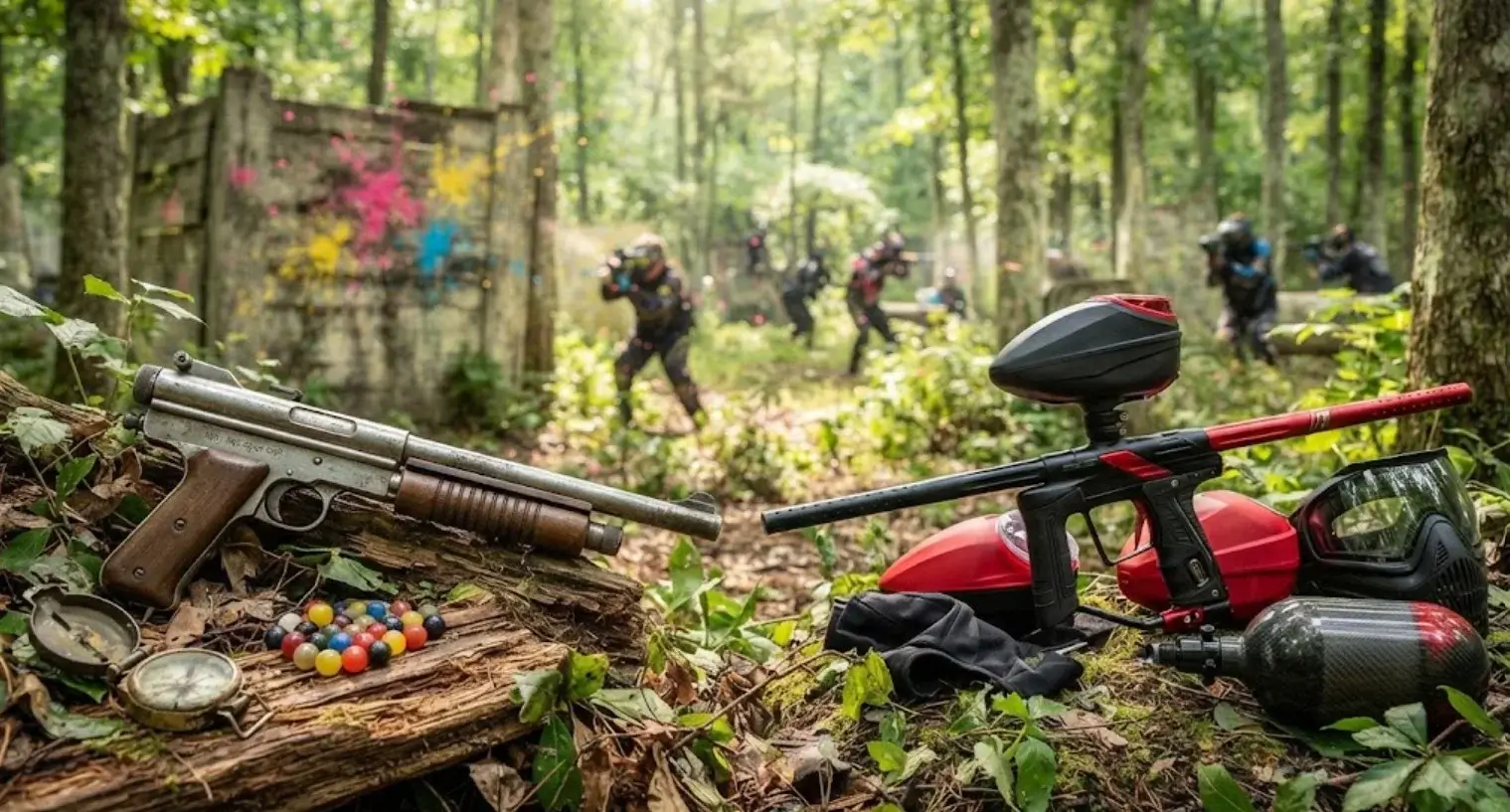
You do not need to understand every component of paintball gear to understand the sport. Three pieces of equipment are central to the basic game: the marker, paintballs, and proper face and eye protection.
Paintball Marker
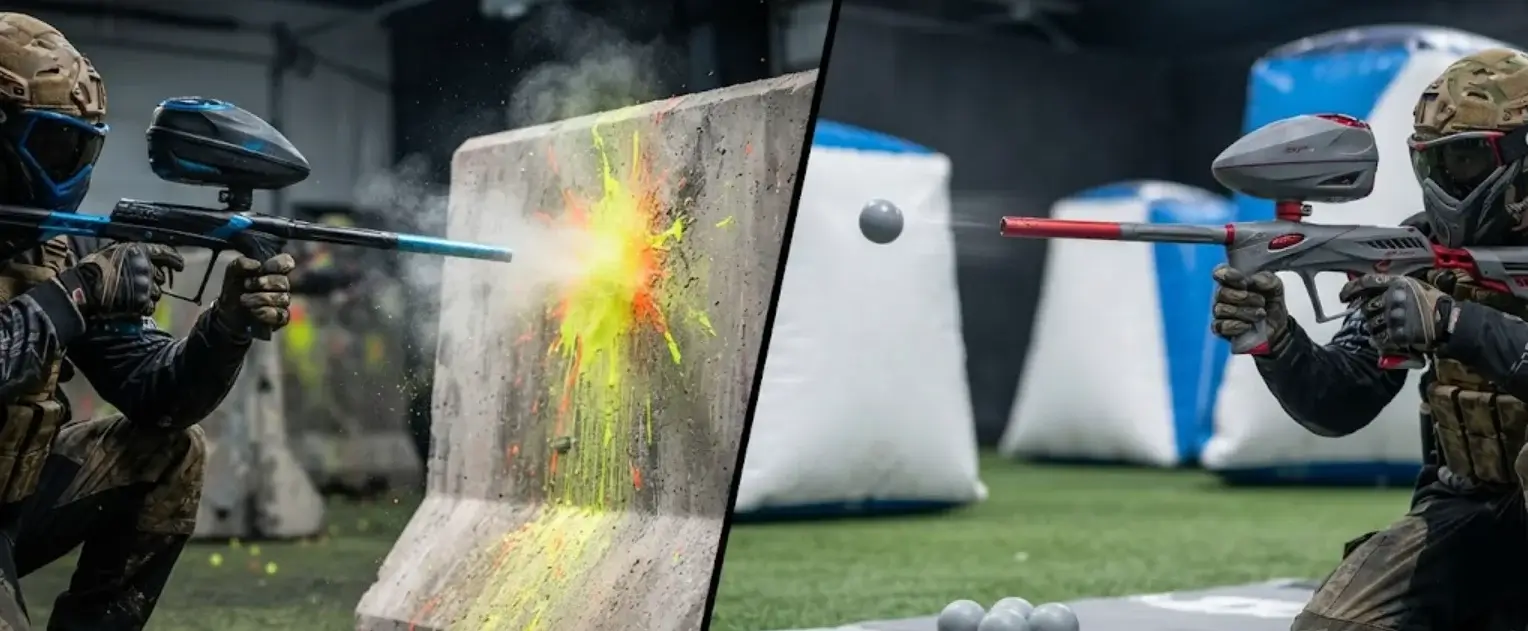
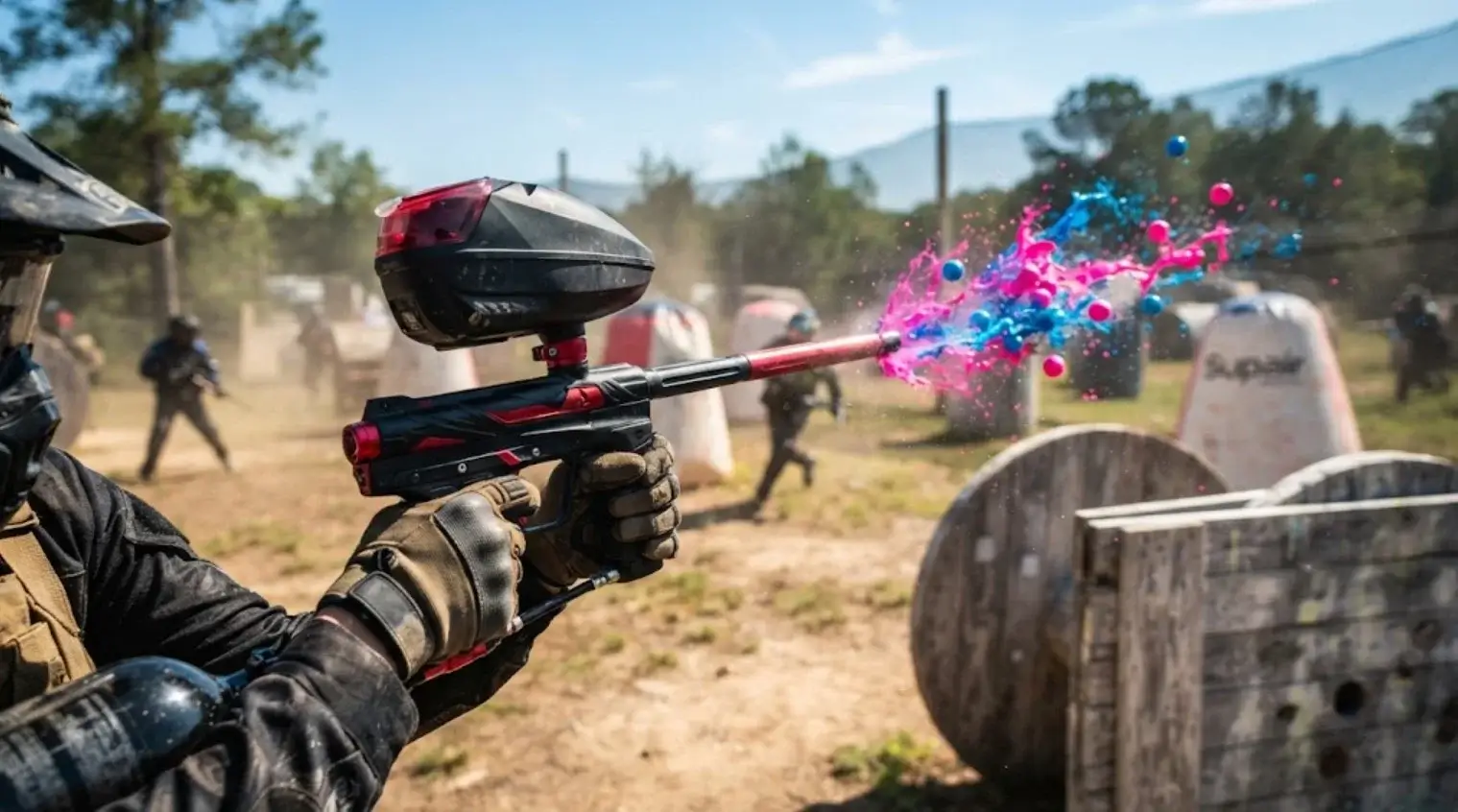
A paintball marker is the device used to propel paintballs during play.
ASTM F2272 covers performance requirements and testing for recreational paintball markers that use energy from compressed air, compressed gas, or a combination of the two.
For understanding the game, that is enough. A player operates the marker, the marker propels a paintball, and that paintball can be used to tag an opponent.
The internal mechanics, firing systems, maintenance procedures, and performance characteristics are separate equipment topics.
Paintballs
A paintball is the breakable projectile used during a paintball game.
Its role is straightforward. When a paintball produces a valid hit under the rules being used, that hit may eliminate the opposing player or otherwise affect the game.
ASTM maintains a separate standard for projectiles used in paintball, which reinforces the distinction between the sport itself and the equipment used to play it.
Paintball Mask and Eye Protection
The paintball mask is one piece of equipment that should never be treated as an optional accessory.
ASTM F1776 covers eye, face, and head protective devices designed for use in paintball sports. The standard focuses on reducing the risk of injury from paintball impact or penetration.
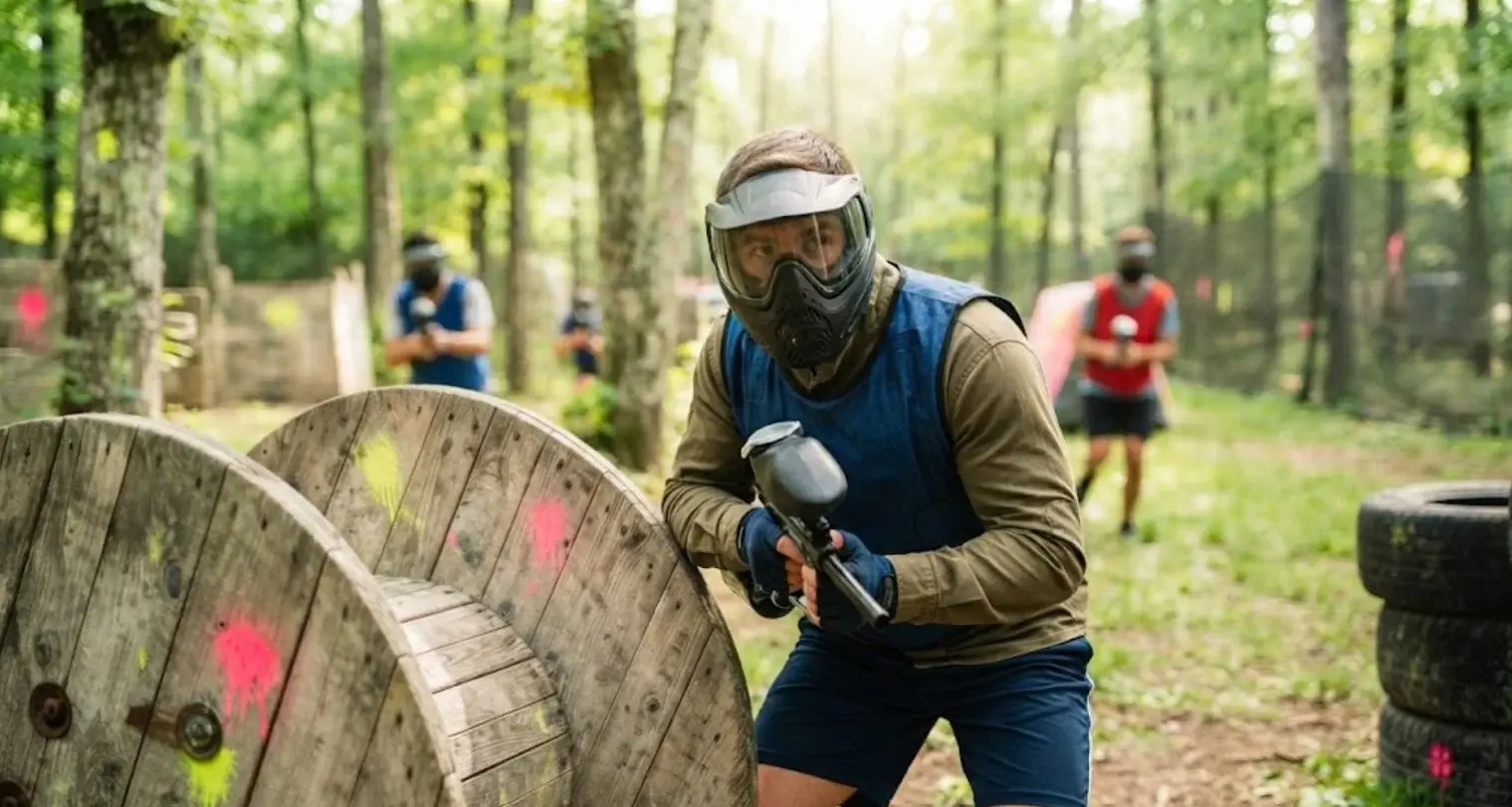
Commercial fields commonly require players to keep approved face and eye protection on while inside active playing areas. Field rules also commonly require barrel-blocking devices when markers return to designated safe areas.
The specific mask technology, lens construction, clothing, and other protective gear deserve their own explanations. For understanding a normal game, remember one thing: proper paintball face and eye protection is part of playing safely.
Where Is Paintball Played?
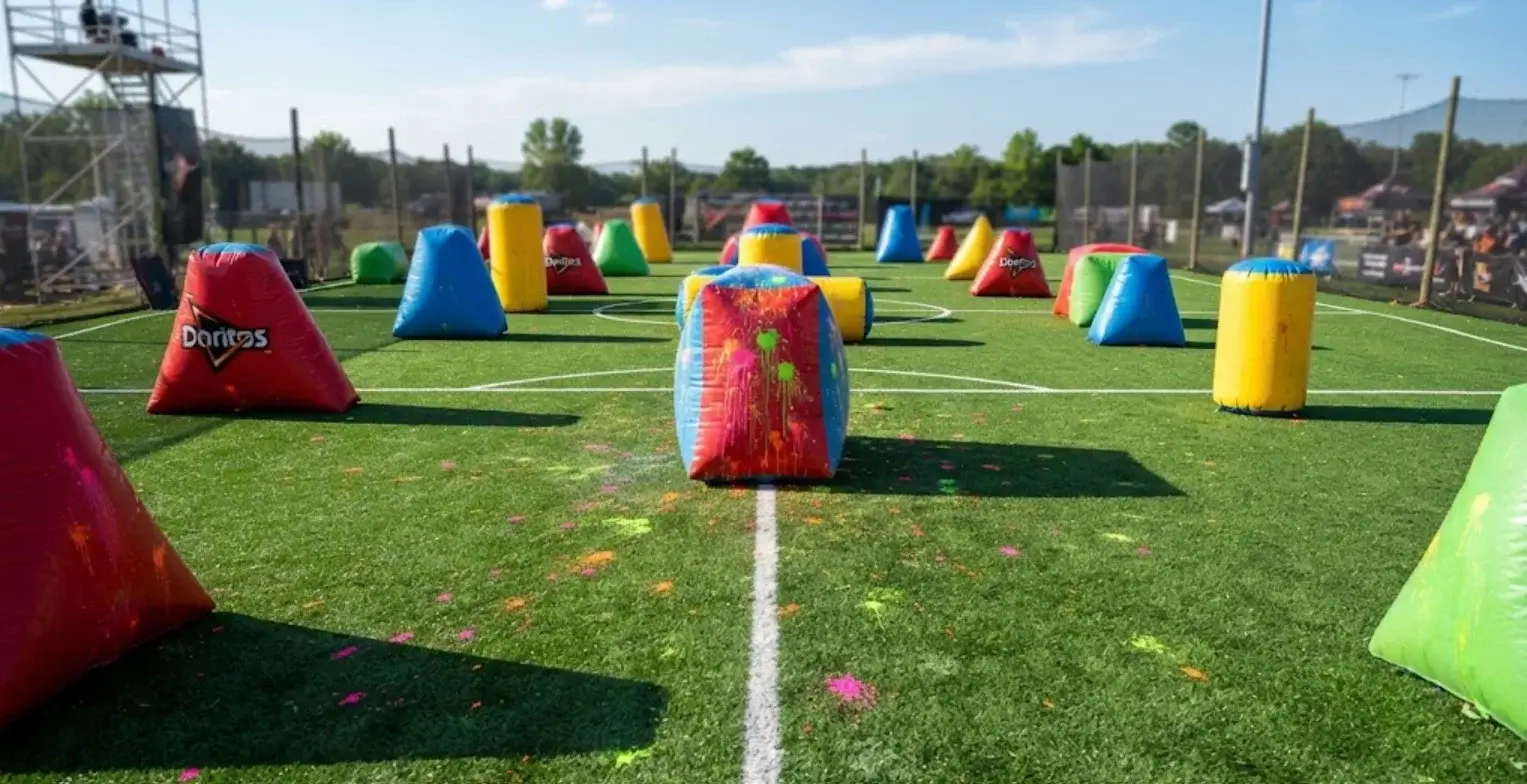
Paintball takes place on a defined paintball field or playing area.
The field gives the game physical boundaries. Inside those boundaries, players usually encounter objects or terrain that provide cover and influence how they move through the game.
A field may contain:
- bunkers
- barriers
- natural or artificial obstacles
- open areas
- designated starting points
- field boundaries
Players move between available areas of cover while working toward the game’s objective.
The exact design is not universal. Paintball can be played in many different environments, but the important concept is the same: the game takes place within a controlled playing area with defined rules and boundaries.
ASTM maintains a specific practice for paintball game-site operation, separate from its standards covering markers and protective equipment.
What Is the Objective of a Paintball Game?
There is no single objective used in every paintball game.
Depending on the game being played, the objective could involve:
- eliminating opposing players
- reaching a designated location
- controlling an objective
- completing a specific task
- meeting another predetermined winning condition
The objective gives the round its purpose. Without it, players would have equipment and a field but no clear condition for deciding how the game progresses or ends.
Competitive paintball demonstrates this clearly. Current NXL formats use defined match structures and objectives rather than one universal format. For example, NXL’s X-Ball format uses five-player teams, repeated points, a match clock, and an opposing-team buzzer as part of its structure.
Recreational paintball can use different objectives. The exact format is less important here than understanding that every round needs rules and an end condition.
What Is Paintball Like?
Reading a paintball definition tells you what the game is. It does not completely explain what a normal paintball session feels like.
For a first-time recreational player, paintball is usually a sequence of preparation, short games, breaks, and more games rather than one continuous match lasting several hours.
Before the First Round
A typical visit begins before anyone starts playing.
The exact process depends on the field, but it may include:
- check-in or registration
- receiving rental equipment when required
- putting on the required safety equipment
- attending a safety briefing
- learning field procedures
- being divided into teams
- receiving instructions for the first game
ASTM F2801 states that basic paintball safety information should be understood by each participant before the player’s first game of the day.
That briefing is worth paying attention to even if you have played elsewhere. Field procedures and game rules are not necessarily identical from one location to another.
During a Paintball Round
Once a round begins, players move through the defined playing area while trying to accomplish the objective.
That can involve moving between bunkers or other cover, keeping track of opponents, communicating with teammates, and reacting as players are eliminated.
Teamwork becomes an obvious part of many paintball games. Players may be pursuing the same objective, but each person is also responding to what is happening elsewhere on the field.
The referee keeps the game moving and deals with rule or safety issues when necessary.
This is also where paintball starts feeling very different from simply understanding it on paper. You are processing movement, teammates, opponents, field boundaries, cover, and the objective at the same time.
Between Games
A paintball session and a paintball game are not the same thing.
One session normally contains multiple rounds. Between those rounds, players may return to a staging area, regroup, prepare their equipment, listen to instructions for the next game, and take a short break.
That distinction explains why someone can spend several hours paintballing even though each individual game may be relatively short. DYE, for example, describes individual matches as commonly lasting around 5 to 15 minutes while the complete experience lasts several hours because it includes preparation, multiple games, and breaks.
Is Paintball a Sport?
Yes. Paintball is played as both a recreational activity and an organized competitive sport.
Several features support that classification:
- defined rules
- organized competition
- physical movement
- individual and team participation
- referees
- game objectives
- structured matches
- specialized sporting equipment
ASTM uses the term “paintball sports” in its current protective-equipment standards. It also maintains standards specifically for paintball markers, projectiles, player safety briefings, and game-site operation.
Organized competitive play provides another clear example. The NXL publishes current rulebooks and defined playing formats for competitive paintball. Its 2026 materials include both divisional X-Ball and match-play rulebooks.
You do not need to play at that level to participate in the sport. Recreational paintball remains the more accessible way many players experience it.
How Long Does a Paintball Game Last?
A common source of confusion is the difference between the duration of one paintball game and the duration of an entire paintballing session.
They can be very different.
| Time Period | What It Means | Typical Expectation |
| Paintball round | One individual game | Often around 5 to 15 minutes |
| Paintball session | Several rounds plus preparation and breaks | Often several hours |
| Organized competitive match | Structured competition under a specific format | Depends on the rules and format |
These are general expectations, not universal limits. Game objectives, field procedures, number of players, breaks, and the specific format can all change how long play takes.
How Long Does One Paintball Round Last?
Many recreational paintball rounds fall somewhere around 5 to 15 minutes, but there is no fixed length for every game.
DYE gives the same general 5 to 15 minute range for individual matches.
A round may end because:
- its objective has been completed
- an elimination condition has been met
- the allotted game time ends
- another rule-based ending condition occurs
Competitive formats can use different clocks. Current NXL X-Ball, for example, uses a 12- to 15-minute match clock depending on division, with teams playing multiple points within that match.
That is another reason not to treat “paintball game length” as one universal number.
How Long Does a Paintball Session Last?
A full recreational paintball session usually involves several games rather than one long round.
Commercial field guidance illustrates how much schedules can vary. Paintball Explosion states that a typical session at its facility lasts about 2 to 4 hours, while DYE recommends planning at least 2 to 3 hours and notes that some full-day experiences can run longer.
A useful way to think about it is:
Paintball session = preparation + safety briefing + several rounds + breaks
If you are booking a session at a particular field, check that field’s schedule instead of assuming a universal duration.
Basic Safety During a Paintball Game
Safety procedures are part of the game, not something separate from it.
ASTM has specific standards for paintball protective devices and player safety briefings. Its F2801 practice states that basic safety information should be understood before a participant’s first game of the day.
For a normal recreational player, the essential habits include:
- wear the required paintball mask in active playing areas
- keep eye and face protection properly in place
- listen to the field’s safety briefing
- remain inside designated boundaries
- follow referee instructions
- follow the site’s procedures when moving between active and safe areas
- use required barrel-blocking equipment in designated safe areas
These practices are also reflected in published field rules, where masks are required in active areas and barrel covers are required when leaving them.
Individual fields may have additional requirements, so their rules take priority during your session.
Paintball in Simple Terms
If someone asks what paintball is, the simplest answer is that it is a recreational and competitive game in which players use paintball markers and paintballs while pursuing an objective on a controlled playing field.
Players may participate as teams or opposing sides. A referee supervises organized games; hits can eliminate players according to the rules, and each round ends when its objective or another defined condition is reached.
A proper paintball mask and eye protection are fundamental parts of normal play, and a typical visit includes a safety briefing before the first round. ASTM’s current paintball standards separately address player protection, markers, site operation, projectiles, and safety briefings.
Most importantly, paintballing is usually a session made up of several individual games, not one continuous game lasting the entire visit. That distinction makes everything from game duration to what you should expect much easier to understand.
For Paintball Renegade, that is the foundation worth learning first. Once you understand the basic game, the different equipment systems, playing formats, rules, and more specialized parts of paintball make much more sense.
Sources and Resources
- ASTM F1776, Eye, Face, and Head Protective Devices for Paintball Sports: paintball-specific protective equipment requirements.
- ASTM F2801, Paintball Player Safety Briefing: guidance on basic safety information participants should understand before playing.
- ASTM F2272, Paintball Markers: performance and testing requirements for recreational paintball markers.
- National Xball League: current rulebooks and organized paintball playing formats.
- DYE Paintball: practical guidance on typical game and session duration.